
About This Chapter: In Revelation fourteen, John sees the Lamb standing on Mount Zion with one hundred and forty-four thousand who were redeemed from the earth. They sang a new song before the throne and before the four living creatures and the elders. Three angels then appear in succession, each proclaiming a critical message to those upon the earth. The chapter continues with a declaration of blessing concerning those who die in the Lord. It then concludes with scenes of harvesting, as angels holding sickles gather from the earth and cast what is gathered into a great winepress.
Revelation 14:1–5 — The Lamb and the One Hundred and Forty-Four Thousand
Revelation 14:6–13 — The Messages of the Three Angels
Revelation 14:14–20 — The Harvest of the Earth and The Winepress
Revelation 14:1–5 — The Lamb and the One Hundred and Forty-Four Thousand
Revelation chapter thirteen proved to be a rather disheartening stop on our journey through this book. In that portion of Scripture, we watched as the dragon (who was earlier identified as Satan) aligned with two individuals who have come to be known as the antichrist and the false prophet.
Revelation 13:13 tells us that the false prophet performed great and miraculous signs, even causing fire to come down from heaven to earth in full view of earth’s inhabitants. Furthermore, “He required everyone—small and great, rich and poor, free and slave—to be given a mark on the right hand or on the forehead. And no one could buy or sell anything without that mark, which was either the name of the beast or the number representing his name” (Revelation 13:16-17 NLT).
But while chapter thirteen painted a grim portrait, chapter fourteen shifts our narrative to God’s perspective. There is only one force in the universe who can oppose these great spiritual adversaries, and that is God Himself. Here, in chapter fourteen, we will witness the beginning of God’s earthly counteroffensive against those demonic forces…
“Then I looked, and behold, a Lamb standing on Mount Zion, and with Him one hundred and forty-four thousand, having His Father’s name written on their foreheads. And I heard a voice from heaven, like the voice of many waters, and like the voice of loud thunder. And I heard the sound of harpists playing their harps.
They sang as it were a new song before the throne, before the four living creatures, and the elders; and no one could learn that song except the hundred and forty-four thousand who were redeemed from the earth. These are the ones who were not defiled with women, for they are virgins. These are the ones who follow the Lamb wherever He goes. These were redeemed from among men, being firstfruits to God and to the Lamb. And in their mouth was found no deceit, for they are without fault before the throne of God” (Revelation 14:1-5).
The “Lamb” is an obvious reference to Jesus, who is identified as “…The Lamb of God who takes away the sin of the world” (John 1:29). However, we should note that the Lamb is not alone, for there are hundred and forty-four thousand others who accompany Him. We first encountered this group earlier in Revelation chapter seven where they were called “servants of God.”
These individuals once resided on earth, but now they are residents of heaven along with their Savior. And as we’ll see, this is a group of people who possess some very special characteristics.
Featured Image: Photo by Roman Ziomka
“Then I looked, and behold, on Mount Zion stood the Lamb, and with him 144,000 who had his name and his Father’s name written on their foreheads” (Revelation 14:1 ESV).
So unlike those who accepted “…the mark or the name of the beast, or the number of his name” (Revelation 13:17), the 144,000 referenced here in Revelation 14:1 carried the mark of their Creator. Thus, they stand in stark contrast to those who openly rebelled against Him by taking the mark of His adversary.
In addition to their sexual purity, Revelation 14:4 offers another characteristic quality that described these individuals: “…they follow the Lamb wherever he leads” (CEV). So, these were people who looked to Jesus and followed His direction for their lives. They took that responsibility seriously, especially in view of Jesus’ repeated exhortations to “follow me” as recorded within the gospel accounts of His life. As Jesus Himself once said, “My sheep listen to my voice; I know them, and they follow me” (John 10:27 NLT).
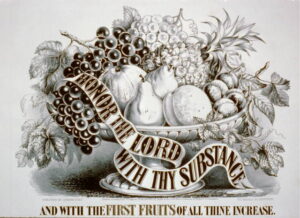 Revelation 14:4 next refers to their status as, “…firstfruits to God and to the Lamb” (NET). The term “firstfruits” denotes the first and best portion of a flock or harvest. That share was consecrated to God as a gesture of worship and thanksgiving (Exodus 23:19). God’s people continue to affirm this principle today whenever they give the first and best of their time, talent, and financial resources to God in gratitude and appreciation for His blessings.
To illustrate the importance of this concept, consider God’s message through the Old Testament prophet Malachi to those who presented Him with the “leftovers” of their lives…
“’A son honors his father, a servant honors his master. I am your Father and Master, yet you don’t honor me, O priests, but you despise my name.’
‘Who? Us?’ you say. ‘When did we ever despise your name?’
When you offer polluted sacrifices on my altar.
‘Polluted sacrifices? When have we ever done a thing like that?’
Every time you say, ‘Don’t bother bringing anything very valuable to offer to God!’ You tell the people, ‘Lame animals are all right to offer on the altar of the Lord—yes, even the sick and the blind ones.’ And you claim this isn’t evil? Try it on your governor sometime—give him gifts like that—and see how pleased he is!
‘God have mercy on us,’ you recite; ‘God be gracious to us!’ But when you bring that kind of gift, why should he show you any favor at all?” (Malachi 1:6-9 TLB).
Therefore, we should ensure that we do not offer God our second best, for He is worthy of our finest efforts.
Image Attribution: Currier & Ives. (ca. 1872) Honor the Lord with thy substance and with the first fruits of all thine increase. , ca. 1872. New York: Published by Currier & Ives. [Photograph] Retrieved from the Library of Congress, https://www.loc.gov/item/2002695910/.
Revelation 14:6–13 — The Messages of the Three Angels
“Then I saw another angel flying in the midst of heaven, having the everlasting gospel to preach to those who dwell on the earth to every nation, tribe, tongue, and people–saying with a loud voice, ‘Fear God and give glory to Him, for the hour of His judgment has come; and worship Him who made heaven and earth, the sea and springs of water.’ And another angel followed, saying, ‘Babylon is fallen, is fallen, that great city, because she has made all nations drink of the wine of the wrath of her fornication’ (Revelation 14:6-8).
Here in Revelation 14:6-8, God mobilizes two members of His celestial air force to execute the next stage of his counter-offensive. The first angel referenced in this passage had a specific message to deliver: “…the eternal gospel to proclaim to those who live on the earth” (NIV). We’ll consider the second angel’s pronouncement regarding “Babylon” in a later study.
As mentioned in our earlier look at Revelation chapter two, the word “angel” relates to the idea of a messenger in the original Biblical languages. Thus, we can say that angels serve as representatives or emissaries for God. We can find one such example in Luke 1:5-38. That portion of Scripture recounts the angel Gabriel’s announcement regarding the imminent births of John the Baptist and Jesus. Genesis 19:1-29, 1 Kings 19:1-8, and Luke 2:8–15 offer some additional examples.
The word “gospel” signifies “good news.” This speaks to the liberating truth that we can escape the eternal punishment of sin and establish a relationship with God through faith in Christ. Two passages from the New Testament books of Romans and 1 John show us the way…
“…if you confess with your mouth the Lord Jesus and believe in your heart that God has raised Him from the dead, you will be saved” (Romans 10:9).
“If we confess our sins, He is faithful and just to forgive us our sins and to cleanse us from all unrighteousness” (1 John 1:9).
In contrast to other spiritual beliefs that focus on human merit, Christianity is not based on the works we must perform to earn God’s favor. Instead, Christianity centers upon God’s redemption through Christ, offering salvation as an unearned gift of grace. Therefore, Acts 4:12 says the following in speaking of Jesus: “There is salvation in no one else. Under all heaven there is no other name for men to call upon to save them” (TLB).
Through his sacrificial death on the cross, Jesus overcomes the chasm between God’s holiness and human sinfulness, freeing humanity from the eternal consequences of sin (see 1 Peter 2:24).
“And he said with a loud voice, ‘Fear God and give him glory, because the hour of his judgment has come, and worship him who made heaven and earth, the sea and the springs of water’” (Revelation 14:7 ESV).
Consider the message proclaimed by the angel who appears here in Revelation 14:7: “Fear God… give him glory… his judgment has come… Worship him.” In modern usage, the word “fear” typically denotes a sense of apprehension characterized by feelings of worry and unease about potential threats or negative outcomes. However, this word is also is used to convey the qualities of reverence, honor, and respect.
For example, notice how Jesus employed the word “fear” in the Gospel of Luke…
“I tell you, my friends, do not be afraid of those who kill the body and after that can do no more. But I will show you whom you should fear: Fear him who, after your body has been killed, has authority to throw you into hell. Yes, I tell you, fear him” (Luke 12:4-5 NIV).
We should note how Jesus separated the words “afraid” and “fear” in this passage: “…do not be afraid of those who kill the body” and, “…Fear Him who, after He has killed, has power to cast into hell.” When we speak of “fearing God” in this manner, it means that we should honor and respect Him above all else. Perhaps this is why Proverbs 9:10 tells us, “The fear of the LORD is the beginning of wisdom, And the knowledge of the Holy One is understanding.”
Nevertheless, we should avoid the mistaken belief that there is nothing to be afraid of when it comes to our relationship with the Almighty. While God is loving, slow to anger, kind, gracious, and compassionate, He also merits our respect and honor. Those who decline to treat Him in that manner should remember that, “It is a fearful thing to fall into the hands of the living God” (Hebrews 10:31).
That being said, there is no cause for apprehension when we approach God through Christ, for “…there is one God and one Mediator between God and men, the Man Christ Jesus” (1 Timothy 2:5). There, we will find love and acceptance through His atoning sacrifice on our behalf. Thus, as we read in the Biblical book of Hebrews, “Let us then approach God’s throne of grace with confidence, so that we may receive mercy and find grace to help us in our time of need” (Hebrews 4:16 NIV).
“‘He said in a loud voice, ‘Fear God and give him glory, for the hour of his judgment has come. Worship the one who made heaven and earth, the sea and springs of water’” (Revelation 14:7 CEB).
This angelic pronouncement here in Revelation 14:7 is brief, but contains some helpful insights for those who are willing to consider this passage carefully. For example, this verse references the hour of God’s judgment. While “judgment” is a subject we often prefer to avoid, we should be aware that the Scriptures speak of two different types of judicial actions that will take place in the future.
One of those judicial actions has come to be known as the “Great White Throne Judgment” of the unrighteous dead that will appear later in Revelation 20:11-15…
“Then I saw a great white throne and Him who sat on it, from whose face the earth and the heaven fled away. And there was found no place for them. And I saw the dead, small and great, standing before God, and books were opened. And another book was opened, which is the Book of Life. And the dead were judged according to their works, by the things which were written in the books” (Revelation 20:11-12),
This passage tells us that “…the dead, both small and great” will undergo this judicial review. This descriptive phrase tells us that social prominence, peer recognition, power, wealth, or status will have no impact upon that call to judgment. You see, who we are now will not matter in that eternal court; the critical factor will be what we are now.
On the other hand, God’s people will face a different type of judgment. That judicial proceeding will feature Jesus’ testimony as mentioned earlier in Revelation 3:5: “He who overcomes shall be clothed in white garments, and I will not blot out his name from the Book of Life; but I will confess his name before My Father and before His angels” (see also John 6:37-39, John 10:27-28, and Romans 8:33-39).
With this in mind, we may take comfort in the fact that God will not judge His people on the question of their salvation; instead, they will be called to account for how they used the skills, talents, abilities, gifts, and opportunities He provides for them now. As 2 Corinthians 5:10 reminds us, “…we must all appear before the judgment seat of Christ, that each one may receive what is due him for the things done while in the body, whether good or bad” (NIV).
Thus we would do well to heed the reminder given to us in Proverbs 5:21: “God is closely watching you, and he weighs carefully everything you do” (TLB).
While the book of Revelation is filled with apocalyptic imagery, it also tells us that God will make a concerted effort to reach humanity in that future period. Those efforts will include two dedicated witnesses, 144,000 others from the tribes of Israel, and an “…angel flying in the midst of heaven, having the everlasting gospel to preach to those who dwell on the earth” (Revelation 14:6). So, while much of the world may seem bleak and hopeless, God will not abandon His efforts to reconcile the members of the human family to Himself during that time.
“And another angel followed, saying, ‘Babylon is fallen, is fallen, that great city, because she has made all nations drink of the wine of the wrath of her fornication.’
Then a third angel followed them, saying with a loud voice, ‘If anyone worships the beast and his image, and receives his mark on his forehead or on his hand, he himself shall also drink of the wine of the wrath of God, which is poured out full strength into the cup of His indignation. He shall be tormented with fire and brimstone in the presence of the holy angels and in the presence of the Lamb. And the smoke of their torment ascends forever and ever; and they have no rest day or night, who worship the beast and his image, and whoever receives the mark of his name.’
Here is the patience of the saints; here are those who keep the commandments of God and the faith of Jesus. Then I heard a voice from heaven saying to me, ‘Write: “‘Blessed are the dead who die in the Lord from now on.’” ‘Yes’ says the Spirit, ‘that they may rest from their labors, and their works follow them’” (Revelation 14:8-13).
 This portion of Scripture marks the first appearance of the word “Babylon” in the book of Revelation. We’ll delve deeper into Babylon’s significance later in chapters seventeen and eighteen. But for now, we can associate “Babylon” with a system of beliefs and practices that actively seek to defy God’s authority throughout the religious, political, and economic realms.
Revelation 14:8-11 then follows with a list of terrifying consequences for “Those who worship the beast and its image and receive the mark on their forehead or on their hand” (GNT)…
- They “…will drink the wine of God’s fury” (NIV).
- “poured out full strength into the cup of His indignation.”
- “[They] will be tormented with fire and brimstone (flaming sulfur)” (AMP).
- “the smoke of their torment goes up forever and ever” (ESV).
- “they will have no relief day or night, for they have worshiped the beast and his statue and have accepted the mark of his name” (NLT).
So those who accept the mark of God’s adversary in light of these warnings will ultimately bear the consequences of their decision.
Image Attribution: Babylon Cinema, Montecruz Foto (CC BY-SA 2.0)
“This calls for patient endurance on the part of the people of God who keep his commands and remain faithful to Jesus” (Revelation 14:12 NIV).
We often admire those who demonstrate their willingness to persevere through difficult situations. Those who are willing to sacrifice for their beliefs and stand firm in the face of adversity are those who often earn our greatest respect. If we seek to emulate those characteristics in our spiritual lives, then we must cultivate the virtuous quality of patient endurance.
The New Testament epistle of James expands on this idea by saying, “Blessed is the one who perseveres under trial because, having stood the test, that person will receive the crown of life that the Lord has promised to those who love him” (James 1:12 NIV). Jesus also touched upon the practical aspects of this subject in a lengthy excerpt from the Gospel of Matthew…
“When the Son of Man comes in His glory, and all the holy angels with Him, then He will sit on the throne of His glory. All the nations will be gathered before Him, and He will separate them one from another, as a shepherd divides his sheep from the goats. And He will set the sheep on His right hand, but the goats on the left.
Then the King will say to those on His right hand, ‘Come, you blessed of My Father, inherit the kingdom prepared for you from the foundation of the world: for I was hungry and you gave Me food; I was thirsty and you gave Me drink; I was a stranger and you took Me in; I was naked and you clothed Me; I was sick and you visited Me; I was in prison and you came to Me.’
Then the righteous will answer Him, saying, ‘Lord, when did we see You hungry and feed You, or thirsty and give You drink? When did we see You a stranger and take You in, or naked and clothe You? Or when did we see You sick, or in prison, and come to You?’ And the King will answer and say to them, ‘Assuredly, I say to you, inasmuch as you did it to one of the least of these My brethren, you did it to Me’” (Matthew 25:31-40).
In like manner, “The sins of some men are obvious, reaching the place of judgment ahead of them; the sins of others trail behind them. In the same way, good deeds are obvious, and even those that are not cannot be hidden” (1 Timothy 5:24 NIV). To paraphrase Revelation 14:13, our works will follow us if we seek God’s enablement to patiently endure life’s trials and challenges.
Revelation 14:14–20 — The Harvest of the Earth and The Winepress
“Then I looked, and behold, a white cloud, and on the cloud sat One like the Son of Man, having on His head a golden crown, and in His hand a sharp sickle. And another angel came out of the temple, crying with a loud voice to Him who sat on the cloud, ‘Thrust in Your sickle and reap, for the time has come for You to reap, for the harvest of the earth is ripe.’
So He who sat on the cloud thrust in His sickle on the earth, and the earth was reaped. Then another angel came out of the temple which is in heaven, he also having a sharp sickle. And another angel came out from the altar, who had power over fire, and he cried with a loud cry to him who had the sharp sickle, saying, ‘Thrust in your sharp sickle and gather the clusters of the vine of the earth, for her grapes are fully ripe.’
So the angel thrust his sickle into the earth and gathered the vine of the earth, and threw it into the great winepress of the wrath of God. And the winepress was trampled outside the city, and blood came out of the winepress, up to the horses’ bridles, for one thousand six hundred furlongs” (Revelation 14:14-20).
 Farming and related agricultural activities formed the backbone of Israel’s first-century economic system. Therefore, it should not surprise us to encounter the use of farming implements in this passage. A sickle was a tool that featured a curved, semicircular blade affixed to a wooden handle. That design made it easier to harvest various crops like grapes and different types of grains. A winepress was used to exert pressure on a cluster of grapes to extract the juice within.
This graphic imagery points to God’s judgment, for the fact that this harvest was thrown into the winepress of God’s wrath indicates that He is taking action against those who opposed Him. We should also note the location of this winepress: it is situated outside the city limits. From an Old Testament perspective, any item that was unclean, unworthy, or impure was transported outside the city (or camp) where the latrines and burial places were located. These word pictures thus allude to the fate of those who ultimately reject their Creator.
Equally disturbing is this reference to the blood that flowed from this winepress. That blood traveled like a river for a distance that equates to roughly 182 miles or 293 kilometers, with a depth of approximately four feet or 1.2 meters. It’s difficult to fully comprehend that type of carnage, but the closing verses of Revelation chapter fourteen alert us to its future certainty.
Image Attribution: Sickle_hanging_from_a_rusty_nail_at_Ardeshir’s_farm.jpg: Christopher Walker from Bielsko-Biala, Polandderivative work: Amada44 talk to me, CC BY 2.0, via Wikimedia Commons