“For what does the Scripture say? “Abraham believed God, and it was accounted to him for righteousness” (Romans 4:3).
Amidst this lengthy discussion concerning Abraham in Romans chapter four, the Apostle Paul raised an important question: “…what saith the scripture?” (KJV). While there are many information 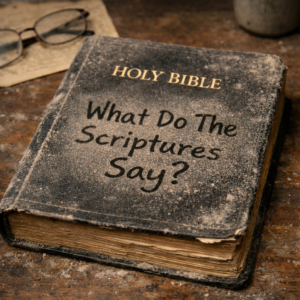 sources that contend for the opportunity to influence our opinions, the Biblical Scriptures should ultimately set the foundation for our convictions. This would encompass a wide range of areas, including our business practices, social interactions, interpersonal relationships, and other aspects of daily life. We can honor God and make wise choices in these areas whenever we pose this question from our text: “What do the Scriptures say?”
Paul advanced that question in Romans 4:3 and then proceeded to answer it himself. In contrast to those who view God’s Word as a dusty relic with little modern relevance, we should note that Paul applied Abraham’s example to a contemporary question of his day. In doing so, he offers a template that we would do well to follow. It also echoes his counsel to the ancient church at Corinth: “These things happened to them as examples, and they were written for our instruction…” (1 Corinthians 10:11 CSB).
So, Abraham believed God (and was justified by faith), long before he received the external sign of circumcision. Here again, this brief quotation from Genesis 15:6 yields some important insights regarding the nature of faith: Abraham believed God, and God subsequently credited that belief to him for righteousness. Nevertheless, we should exercise caution before we assume that a direct correlation exists between righteousness and mere belief.
Consider the following passage from the Biblical epistle of James: “You believe that there is one God. You do well. Even the demons believe—and tremble!” (James 2:19). In light of this, we can say that no one is righteous simply because he or she believes God exists. Even demonic beings (who are certainly not righteous) believe that. Instead, Abraham believed God. In other words, the emphasis is on the Object of his faith.
The following source offers a further explanation…
“Faith is something we exercise, but Paul does not consider it a work in the same way that obedience to the law is. Works involve the bringing of what we do to God and saying that we deserve justification. Faith involves the admission that nothing we can do makes us deserving of salvation…” (1)
So when we read that “…it was accounted to him for righteousness,” the “it” refers to Abraham’s conviction that God would do what He promised. Thus, Abraham’s faith in God Himself was the means by which he was accounted righteous.
(1) Not by works (2014, March 10). Ligonier Ministries. https://learn.ligonier.org/devotionals/not-works