Revelation – Chapter Twelve

About This Chapter: Revelation chapter twelve presents a series of signs seen in heaven. John describes a woman clothed with the sun, with the moon under her feet and a crown of twelve stars, who is about to give birth. A great red dragon appears and positions itself before the woman to devour her child. The child is born and is taken up to God and to His throne, and the woman flees into the wilderness to a prepared place. A war then takes place in heaven, and the dragon is cast down to the earth. The chapter concludes with the dragon pursuing the woman and turning its attention to others associated with her.

Revelation 12:1–6 — The Woman and the Child
Revelation 12:7–9 — War in Heaven
Revelation 12:10–12 — The Proclamation in Heaven
Revelation 12:13–17 — The Dragon’s Pursuit Continued

Revelation 12:1–6 — The Woman and the Child

I

Revelation chapter twelve introduces several key figures along with some information that helps us identify them…

“Now a great sign appeared in heaven: a woman clothed with the sun, with the moon under her feet, and on her head a garland of twelve stars. Then being with child, she cried out in labor and in pain to give birth. And another sign appeared in heaven: behold, a great, fiery red dragon having seven heads and ten horns, and seven diadems on his heads.

His tail drew a third of the stars of heaven and threw them to the earth. And the dragon stood before the woman who was ready to give birth, to devour her Child as soon as it was born. She bore a male Child who was to rule all nations with a rod of iron. And her Child was caught up to God and His throne” (Revelation 12:1-5).

So these verses present us with a pregnant woman, an enormous red dragon, and a male child. Who are these characters, and how should we understand their individual roles within this narrative?

One way to answer those questions is hiding in plain sight at the beginning of our text: “Now a great sign appeared…” A “sign” is something that indicates, designates, or points to something else. Much like a road sign that points us to another destination, the same is true of these characters from Revelation 12:1-5.

Let’s first consider the woman mentioned here. She wears the sun as a garment, the moon is beneath her feet, and a crown of twelve stars adorns her head. In addition to what we read in this passage, there is another portion of Scripture where the sun, moon, and stars play a significant role. That text is found in Genesis 37:9-10, and recounts a dream that Joseph, the famous Biblical figure, once experienced…

“Then [Joseph] dreamed still another dream and told it to his brothers, and said, ‘Look, I have dreamed another dream. And this time, the sun, the moon, and the eleven stars bowed down to me.’ So he told it to his father and his brothers; and his father rebuked him and said to him, ‘What is this dream that you have dreamed? Shall your mother and I and your brothers indeed come to bow down to the earth before you?’”

Notice Joseph’s father’s response to his dream: “What is this dream you had? Will your mother and I and your brothers actually come and bow down to the ground before you?” (NIV). This tells us that he associated these elements of Joseph’s dream with the members of his family.

We can tie these elements together when we recall that Joseph’s father’s name was Israel. His sons later became the leaders of the twelve tribes of Israel. Thus, we should be on solid interpretive ground if we link this woman and these references to the sun, moon, and stars with the nation of Israel.

Featured Image: Photo by Orlando Allo

Image Attribution :Photo by Jan van der Wolf, via pexels.com

II

“And another sign appeared in heaven: behold, a great red dragon, with seven heads and ten horns, and on his heads seven diadems” (Revelation 12:3 ESV).

In speaking of a large, red, seven-headed dragon, Revelation 12:3 offers another sign. Red is traditionally associated with the color of war, while dragons are large, destructive, and dangerous. While the number seven is typically associated with the idea of perfection, this passage does not suggest perfection in a positive sense. Instead, this being is perfectly evil. The crowns are symbolic of power and authority, and as for the horns, we will consider them at greater length when we reach Revelation chapter thirteen.

We can skip ahead in Revelation chapter twelve to gain a clearer picture of this dragon’s true identity: “So the great dragon was cast out, that serpent of old, called the Devil and Satan, who deceives the whole world; he was cast to the earth, and his angels were cast out with him” (Revelation 12:9). This leads us to a comparative analysis that offers a great deal of spiritual insight.

When “that serpent of old first appeared in the first book of the Bible, he seemed to be little more than a talkative and inquisitive serpent. (1) But here in the last book of the Bible, he has grown to become an enormous seven-headed dragon. That comparison thus serves as a fitting analogy for sin. For instance, a seemingly minor indiscretion of thought or deed may eventually grow into something uncontrollable that threatens to consume us. Therefore, we would do well to seek God’s help in avoiding such things before small sins turn into large ones.

Revelation 12:4 continues by saying, “His tail swept down a third of heaven’s stars and threw them to the earth…” (CEB). This passage should catch our attention, for Job 38:6-7 draws a parallel between stars and angelic beings. In fact, the Biblical book of the prophet Isaiah describes Satan himself in that very manner. (2)

This has led some commentators to the understanding that Satan persuaded one-third of the angelic realm to join him in his rebellion against God. We now refer to those beings as “demons.” The act of throwing (or flinging) them to the earth tells us that they no longer serve God in heaven, but work to fulfill the dragon’s agenda on earth.

While such a thought may be terrifying to contemplate, it also means that two-thirds of the angelic realm remain in God’s service and represent “…ministering spirits sent to serve those who will inherit salvation” (Hebrews 1:14). But more importantly, God is ultimately responsible for the safety and security of His people, for as we’re reminded in the New Testament epistle of 1 John, “…He who is in you is greater than he who is in the world” (1 John 4:4).

(1) Or at least he appeared that way to Eve.

(2) While the text of Isaiah 14:1-23 concerns the king of Babylon, the context of verses twelve to fifteen addresses the Satanic power behind his throne.

III

“His tail swept away a third of the stars in heaven and hurled them to the earth. And the dragon stood in front of the woman who was about to give birth, so that when she did give birth he might devour her child. But she gave birth to a Son–a male who is going to shepherd all nations with an iron scepter–and her child was caught up to God and to His throne” (Revelation 12:4-5 HCSB).

We’ve already identified two of the three figures that appear in the opening verses of Revelation chapter twelve. The woman spoken of here is representative of Israel, while the dragon represents Satan. Who then is the male child who is referenced in this passage? Well, we can associate this child with Jesus Himself.

As a human being, Jesus came forth from the nation of Israel, thus establishing His connection to the woman of Revelation 12:1. In addition, this reference to “an iron scepter” recalls a similar term used earlier in Psalm two where God the Father issues the following invitation to His Son…

“Ask of Me, and I will give You The nations for Your inheritance, And the ends of the earth for Your possession. You shall break them with a rod of iron; You shall dash them to pieces like a potter’s vessel” (Psalm 2:8-9).

We’re also told that “…the dragon stood before the woman who was about to give birth, so that he might devour her child as soon as it was born” (NET). The Biblical Scriptures offer several historic examples that might fit this image. Consider the following excerpt from the book of Exodus…

“… Pharaoh, the king of Egypt, instructed the Hebrew midwives… to kill all Hebrew boys as soon as they were born, but to let the girls live. But the midwives feared God and didn’t obey the king- they let the boys live too… Then Pharaoh commanded all of his people to throw the newborn Hebrew boys into the Nile River. But the girls, he said, could live” (Exodus 1:15-16, 22 TLB).

The Old Testament books of 1 and 2 Samuel also detail several attempts on the life of king David, the ancestor of God’s promised Savior. Then we have the Biblical book of Esther, a work that chronicles the account of a man named Haman and his attempt to exterminate the Jewish people. Finally, we have the New Testament example of king Herod. Shortly after Jesus’ birth, Herod killed every male child aged two and younger in the city of Bethlehem and the surrounding areas in an attempt to eliminate Jesus as a rival king.

From a 21st century perspective, we can associate each of these events with the dragon’s attempts to “devour” Jesus before He had an opportunity to fulfill His role as Savior.

IV

“So the woman gave birth to a son, a male child, who is going to rule over all the nations with an iron rod. Her child was suddenly caught up to God and to his throne” (Revelation 12:5 NET).

Having failed in his attempt to eliminate the child mentioned here, the dragon of Revelation chapter twelve suffered a further setback: “Then the woman fled into the wilderness where God had prepared a place for her so that she might be taken care of for 1,260 days” (Revelation 12:6). So, we now move forward from the affairs of the past in verses four and five to a future where the events of Revelation chapter twelve are unfolding.

Just as God protected His people on numerous occasions throughout their long history, our text from Revelation 12:6 tells us that God will step forward to protect His people once again in the future. This place of sanctuary will function as a safe haven for three and one-half years (or 1,260 days based on a 360-day calendar year).

“And war broke out in heaven: Michael and his angels fought with the dragon; and the dragon and his angels fought, but they did not prevail, nor was a place found for them in heaven any longer. So the great dragon was cast out, that serpent of old, called the Devil and Satan, who deceives the whole world; he was cast to the earth, and his angels were cast out with him.

Then I heard a loud voice saying in heaven, ‘Now salvation, and strength, and the kingdom of our God, and the power of His Christ have come, for the accuser of our brethren, who accused them before our God day and night, has been cast down. And they overcame him by the blood of the Lamb and by the word of their testimony, and they did not love their lives to the death.

Therefore rejoice, O heavens, and you who dwell in them! Woe to the inhabitants of the earth and the sea! For the devil has come down to you, having great wrath, because he knows that he has a short time’” (Revelation 12:7-12).

This is an astonishing development- war in heaven. But who initiated these hostilities? Did the dragon and his legions attempt to mount a “hostile takeover” of heaven? Or did God elect to forcibly remove them from the heavenly realm? Either way, these verses paint a portrait that depicts a titanic struggle between the forces of good and evil in the celestial world.


Revelation 12:7–9 — War in Heaven

V

“Then war broke out in heaven. Michael and his angels fought against the dragon, and the dragon and his angels fought back” (Revelation 12:7 NIV).

It’s important to note the participants in this conflict: “…Michael and his angels battled with the dragon. The dragon and his angels fought back” (Phillips). This reminds us that Satan (or “the dragon” as he is referred to in this passage), is not God’s equal. Instead, a more accurate comparison would involve Michael, the archangel, along with the other angels mentioned in this passage.

The Old Testament book of the prophet Daniel may offer some additional insight into this period when it tells us, “At that time Michael, the great prince who protects your people, will arise. There will be a time of distress such as has not happened from the beginning of nations until then” (Daniels 12:1 NIV). That battle will end with a decisive blow…

“And the dragon lost the battle, and he and his angels were forced out of heaven. This great dragon–the ancient serpent called the devil, or Satan, the one deceiving the whole world–was thrown down to the earth with all his angels” (Revelation 12:8-9 NLT).

This passage employs several descriptive phrases with respect to this great spiritual enemy…

  • Dragon. One dictionary reference to the word “dragon” includes the following definition: “Something very formidable or dangerous.” (1) This aligns with the warning given to us in 1 Peter 5:8: “Stay alert! Watch out for your great enemy, the devil. He prowls around like a roaring lion, looking for someone to devour” (NLT).
  • Serpent or “snake.” In the context of human relationships, the word “snake” describes a deceitful, underhanded, or treacherous individual. But in this case, these words are not merely descriptive of Satan’s conduct; they form the very basis of his character.
  • Devil. The word “devil” refers to a “false accuser,” and finds its origin in a word that means “slanderer.” (2)
  • Satan. The name “Satan” means “adversary.” (3)

Finally, these verses add one additional descriptive phrase in speaking of the one “…who deceives the whole world” (NET). So we can include “deception” to this list of negative characteristics as well.

The Biblical book of Job suggests that the devil, even in his fallen state, retained some degree of access to the heavenly realm (see Job 1:6-10 for an example). But that time has come to an end, as chronicled here in verses eight and nine. As we’ll see over the next few verses, this new reality will lead to a period of rejoicing for the inhabitants of heaven. But what was good news for them will mean something very different for the world’s inhabitants.

(1) dragon. (n.d.) American Heritage® Dictionary of the English Language, Fifth Edition. (2011). Retrieved February 14 2025 from https://www.thefreedictionary.com/dragon

(2) G1228 – diabolos – Strong’s Greek Lexicon (kjv). (n.d.). Blue Letter Bible. https://www.blueletterbible.org/lexicon/g1228/kjv/tr/0-1/

(3) G4567 – satanas – Strong’s Greek Lexicon (rsv). (n.d.). Blue Letter Bible. https://www.blueletterbible.org/lexicon/g4567/rsv/mgnt/0-1/


Revelation 12:10–12 — The Proclamation in Heaven

VI

“Then I heard a loud voice saying in heaven, ‘Now salvation, and strength, and the kingdom of our God, and the power of His Christ have come, for the accuser of our brethren, who accused them before our God day and night, has been cast down.

And they overcame him by the blood of the Lamb and by the word of their testimony, and they did not love their lives to the death.

Therefore rejoice, O heavens, and you who dwell in them! Woe to the inhabitants of the earth and the sea! For the devil has come down to you, having great wrath, because he knows that he has a short time’” (Revelation 12:10-12).

So having lost access to the heavenly realm, the enemy was forcibly removed to the only theater of operation left to him: the earth. Much like a cornered, wounded animal, this passage tells us, “The devil has come down to you with great rage, for he knows that he only has a short time” (CEB). Unfortunately, that type of animal is often the most dangerous, as we’ll see…

“Now when the dragon saw that he had been cast to the earth, he persecuted the woman who gave birth to the male Child. But the woman was given two wings of a great eagle, that she might fly into the wilderness to her place, where she is nourished for a time and times and half a time, from the presence of the serpent.

So the serpent spewed water out of his mouth like a flood after the woman, that he might cause her to be carried away by the flood. But the earth helped the woman, and the earth opened its mouth and swallowed up the flood which the dragon had spewed out of his mouth. And the dragon was enraged with the woman, and he went to make war with the rest of her offspring, who keep the commandments of God and have the testimony of Jesus Christ” (Revelation 12:13-17).

Most of us have likely seen or encountered someone whose anger was so intense that they unleashed their rage upon others. That experience serves to illustrate the dragon’s wrath toward the woman who had given birth to the male child mentioned earlier in verse five. The instrument of his fury is a great flood that threatened to sweep her away.

It’s unclear if this passage refers to a literal flood, or a flood in the sense of a town that is “flooded” by a massive influx of people. But what is certain is that God will execute a supernatural rescue: “But the earth came to the woman’s rescue, opened its mouth and swallowed up the river which the dragon had emitted from his mouth” (Revelation 12:16 Phillips).


Revelation 12:13–17 — The Dragon’s Pursuit Continued

VII

“But the earth came to the help of the woman, and the earth opened its mouth and swallowed the river that the dragon had poured from his mouth. Then the dragon became furious with the woman and went off to make war on the rest of her offspring, on those who keep the commandments of God and hold to the testimony of Jesus. And he stood on the sand of the sea” (Revelation 12:16-17 ESV).

So, the fact that the earth served to protect the woman of Revelation 12:13-16 from the dragon’s destructive flood only served to enrage him more. Nevertheless, this sequence of events is much like God’s miraculous parting of the Red Sea in one sense. For instance, when the people of Old Testament Israel departed from the nation of Egypt, the Biblical book of Exodus tells us, “The Egyptian army, with all the horses, chariots, and drivers, pursued them and caught up with them where they were camped by the Red Sea…” (Exodus 14:9 GNB).

In response, Moses stretched out his hand over the sea, “…and the Lord caused the sea to go back by a strong east wind all that night, and made the sea into dry land, and the waters were divided. So the children of Israel went into the midst of the sea on the dry ground, and the waters were a wall to them on their right hand and on their left” (Exodus 14:21-22).

This allows us to draw certain parallels between these narratives. In the Exodus account, God parted the waters to provide His people with a way of escape. Here in the book of Revelation, God parted the earth to offer a similar path to safety. While the method of escape varied, the final result (arrival at a place of safety) remained the same.

However, that served to infuriate the enemy even further: “So the dragon became enraged at the woman and went away to make war on the rest of her children, those who keep God’s commandments and hold to the testimony about Jesus” (Revelation 12:17 NET). The word “furious” or “enraged” comes from a root word that means “any violent emotion, but esp. anger” or, “violent passion… by implication punishment.(1) Thus, anyone who seeks to follow Christ during this period will be subject to a declaration of war.

So, that brings us to the end of Revelation chapter twelve. However, it also brings us to the emergence of two pivotal characters in the following chapter: the beast of the sea and the beast of the earth.

(1) G3709 – orge – Strong’s Greek Lexicon (kjv). (n.d.). Blue Letter Bible. https://www.blueletterbible.org/lexicon/g3709/kjv/tr/0-1/

Revelation – Chapter Eleven

About This Chapter: Revelation chapter eleven continues with an interim period between the sixth and seventh trumpets. John is instructed to measure the temple, and two witnesses are described who witness for a specified period of time. After their testimony, they are killed and later raised. The chapter concludes with the sounding of the seventh trumpet and a scene in heaven in which voices proclaim the reign of God and His Christ.

Revelation 11:1–2 — The Measuring of the Temple
Revelation 11:3–10 — The Two Witnesses
Revelation 11:11–13 — The Witnesses Raised
Revelation 11:14–19 — The Seventh Trumpet


Revelation 11:1–2 — The Measuring of the Temple

I

“Then I was given a reed like a measuring rod. And the angel stood, saying, ‘Rise and measure the temple of God, the altar, and those who worship there. But leave out the court which is outside the temple, and do not measure it, for it has been given to the Gentiles. And they will tread the holy city underfoot for forty-two months” (Revelation 11:1-2).

The opening verses of Revelation chapter eleven mark the emergence of the temple of God, a structure that is rich with historical significance. King Solomon oversaw the construction and subsequent dedication of Israel’s first temple in 953 B.C. That magnificent building stood until 586 B.C. when it was destroyed by the invading Babylonian army. It was later rebuilt around 517 B.C. as chronicled in the book of the Old Testament prophet Ezra (6:15-16).

Centuries later, another temple building project began under the patronage of a secular governor known to history as Herod the Great. An ancient account of that project tells us that the temple’s primary structure was built of stone and gold and took almost a decade to complete. It was also said that the sun reflected off the white stone and gold of the temple with such intense brilliance that it was impossible to gaze upon it from a distance in the daytime.

With this in mind, let’s consider Jesus’ message to His disciples concerning the temple of that era…

“As Jesus was leaving the temple, one of his disciples said to him, ‘Look, Teacher! What massive stones! What magnificent buildings!’ ‘Do you see all these great buildings?’ replied Jesus. ‘Not one stone here will be left on another; every one will be thrown down’” (Mark 13:1-2 NIV).

That forewarning materialized roughly four decades after Jesus spoke those words. Beginning in A.D. 69, the Roman general Titus marched on the city of Jerusalem with 30,000 armed forces. His military objective involved a systematic and ruthless campaign to eliminate any remaining opposition to the Roman Empire. That military action leveled the city of Jerusalem along with the temple and every other major building. It also led to an estimated loss of one million lives.

The elaborate architecture of the temple reflected its role as a central component of Jewish spiritual and cultural identity. However, the Romans demolished the temple so thoroughly that modern scholars and archaeologists cannot pinpoint the exact location of several portions of it. Thus, Jesus’ prophetic statement came to pass just as He said: “…the time is coming when not even one stone will be left upon another. All will be demolished” (Luke 21:6 CEB).

We’ll tie these historic elements together next.

II

“Then I was given a measuring rod like a staff, and I was told, ‘Rise and measure the temple of God and the altar and those who worship there’” (Revelation 11:1 ESV).

Although the temple of Jesus’ day has long since disappeared, our author was told to conduct a survey of the temple structure along with those who worshipped there in Revelation 11:1. This has led some to predict the eventual construction of a future temple. That, along with details to be revealed later in the Book of Revelation, will culminate in the appearance of an individual known as the antichrist, according to this view.

The Biblical book of 2 Thessalonians speaks of such a person, a man “…who opposes and exalts himself above all that is called God or that is worshiped, so that he sits as God in the temple of God, showing himself that he is God” (2 Thessalonians 2:4). Thus, he will attempt to substitute himself in place of God, claiming the title and worship that is reserved for God alone. We’ll discuss this subject at greater length when we reach Revelation chapter thirteen.

“But exclude the outer court; do not measure it, because it has been given to the Gentiles. They will trample on the holy city for 42 months” (Revelation 11:2 NIV).

The “holy city” is associated with the city of Jerusalem. This passage tells us that those who are hostile to God will trample the city for forty-two months, or 3 1/2 years. This word “trample” from Revelation 11:2 means to ‘crush with the feet” and, ”to treat with insult and contempt.” (1) This indicates that the destruction associated with this period will be quite severe.

We are then introduced to two new characters in verse three…

“And I will give power to my two witnesses, and they will prophesy one thousand two hundred and sixty days, clothed in sackcloth. These are the two olive trees and the two lampstands standing before the God of the earth. And if anyone wants to harm them, fire proceeds from their mouth and devours their enemies. And if anyone wants to harm them, he must be killed in this manner. These have power to shut heaven, so that no rain falls in the days of their prophecy; and they have power over waters to turn them to blood, and to strike the earth with all plagues, as often as they desire” (Revelation 11:3-6).

So God will dispatch two representatives during this period. These individuals will…

  1. Be empowered by God.
  2. Prophesy.
  3. Be clothed in sackcloth.

We’ll discuss these witnesses further in our next study.

(1) G3961 – pateo – Strong’s Greek Lexicon (kjv). (n.d.). Blue Letter Bible. https://www.blueletterbible.org/lexicon/g3961/kjv/tr/0-1/


Revelation 11:3–10 — The Two Witnesses

III

“I will empower my two witnesses, and they will prophesy for 1,260 days, dressed in sackcloth” (Revelation 11:3 HCSB).

We’ll begin our look at the witnesses of Revelation 11:3 with the second characteristic referenced here: prophecy. As mentioned earlier in our study of the church of Thyatira, a “prophet” is someone who possesses the unerring ability to offer God’s direction. This word also describes someone who conveys divinely inspired information regarding a specific circumstance or future event.

These individuals mentioned here in Revelation 11:3 will serve as God’s representatives during this interval. And much like an ambassador or spokesperson, these witnesses will communicate God’s message for a specific time period. However, their mission allows us to make a contemporary application as well.

While the ministry of these prophetic witnesses lay in the future, there are modern-day leaders who claim to fulfill a similar prophetic role today. With this in mind, the Scriptures encourage us to put those individuals to the test: “Beloved, do not believe every spirit, but test the spirits, whether they are of God; because many false prophets have gone out into the world” (1 John 4:1).

That passage should also encourage us to follow the counsel given to us in the New Testament book of 1 Thessalonians: “Test everything. Hold on to the good. Avoid every kind of evil” (1 Thessalonians 5:21-22 NIV). Much like a jeweler who inspects a gemstone to verify its authenticity, these verses remind us to examine the alleged prophecies we may encounter and measure them against the Biblical Scriptures.

This is especially true of those individuals or organizations that self-identify as “Christian” but derive their doctrinal beliefs from sources other than the sixty-six books of the Old and New Testaments. In the words of a source quoted earlier, “The ability to prophesy may involve predicting future events, but its main purpose is to communicate God’s message to people, providing insight, warning, correction, and encouragement.” (1) That definition serves to describe the role of God’s witnesses here in Revelation 11.

Today, we might best associate the use of a prophetic gift with the ability to bring a fresh application of Biblical truth as prompted by the Holy Spirit. But before we leave this subject, there is one final concern to discuss. That concern involves those who tend to perceive their internal thoughts, feelings, or impressions as “a word from the Lord.”

While God may speak to us in that manner, we should be mindful of Proverbs 30:5-6 before making such an assumption: ”Every word of God is flawless; he is a shield to those who take refuge In him. Do not add to his words, or he will rebuke-you and prove you a liar” (NIV). Thus, it may be preferable to say, ”I believe God has spoken to me’‘ in such situations. That caveat acknowledges the reality of human imperfection as we pursue a well-intentioned desire to hear from God.

(1) Life Application Study Bible [1 Corinthians 14:1] Copyright © 1988, 1989, 1991, 1993, 1996, 2004 by Tyndale House Publishers Inc., all rights reserved.

IV

“And I will grant authority to my two witnesses, and they will prophesy for 1,260 days, clothed in sackcloth” (Revelation 11:3 ESV).

While “sackcloth” is largely unfamiliar to modern-day audiences, it was a material held deep cultural significance in the Old and New Testament periods.

Sackcloth was a coarse, rough, bag-like material with a texture and appearance that lived up to its name. Sackcloth was typically constructed from camel or goat hair in the Biblical era. Thus, a burlap bag or coarse brown sack would probably form the closest modern equivalent to this type of clothing material. The act of wearing sackcloth symbolized deep emotional distress and indifference to worldly comforts, especially during a time of emotional sorrow.

That brings us to these two witnesses and their God-given authority. Revelation 11:4 offers some additional insight into the power behind these individuals: “These witnesses are the two olive trees and the two lamp stands standing in the presence of the Lord of the earth” (GW). Therefore, we can say these witnesses possess authority along with humility as well (as symbolized by the act of wearing sackcloth).

The imagery associated with these olive trees and oil-fueled lamps is not unique to the Book of Revelation. For instance, the book of the Biblical prophet Zechariah presents us with a similar word-picture (see Zechariah chapter four). The idea is that these olive trees will yield a limitless supply of fuel, thus ensuring a continuous and inexhaustible source of illumination for these lamps. In addition, oil is symbolic of the Holy Spirit who enables these witnesses to serve as a light to the world during this period.

The following verses tell us that God will also provide these witnesses with a variety of offensive and defensive weapons…

“If anyone tries to harm them, fire comes from their mouths and devours their enemies. This is how anyone who wants to harm them must die. They have power to shut up the heavens so that it will not rain during the time they are prophesying; and they have power to turn the waters into blood and to strike the earth with every kind of plague as often as they want” (Revelation 11:5-6).

While these witnesses may possess the ability to incinerate their enemies, this reference to fire may also pertain to the message God had given them, a message that will fully consume their enemies. Finally, their ability to call forth fire and ”every kind of plague” is reminiscent of the supernatural enablements that Elijah (2 Kings 1:9-12) and Moses (Exodus 7-12) possessed as well.

Image Attribution : PxHere

V

“When they finish their testimony, the beast that ascends out of the bottomless pit will make war against them, overcome them, and kill them. And their dead bodies will lie in the street of the great city which spiritually is called Sodom and Egypt, where also our Lord was crucified. Then those from the peoples, tribes, tongues, and nations will see their dead bodies three-and-a-half days, and not allow their dead bodies to be put into graves.

And those who dwell on the earth will rejoice over them, make merry, and send gifts to one another, because these two prophets tormented those who dwell on the earth. Now after the three-and-a-half days the breath of life from God entered them, and they stood on their feet, and great fear fell on those who saw them. And they heard a loud voice from heaven saying to them, “Come up here.’

And they ascended to heaven in a cloud, and their enemies saw them. In the same hour there was a great earthquake, and a tenth of the city fell. In the earthquake seven thousand people were killed, and the rest were afraid and gave glory to the God of heaven” (Revelation 11:7-13).

It’s important to consider the time sequence associated with the series of events that take place here in Revelation 11:7-13. This portion of Scripture begins with the “end of watch” (1) for the witnesses who were introduced to us earlier in verse three. Thus, we can say that these witnesses are invincible until God dismisses them from their divinely appointed task.

Revelation 11:7 identifies the entity that kills these witnesses as “the beast.” This is the first of over two dozen references to this being in the book of Revelation. Much like the antichrist mentioned earlier in our study of this chapter, we will discuss this being at greater length when we reach Revelation chapter thirteen.

Revelation 11:8 then continues by saying, “Their bodies will be left lying in the streets of the same great city where their Lord was nailed to a cross. And that city is spiritually like the city of Sodom or the country of Egypt” (CEV). Much like the “holy city” referenced earlier, we can associate the reference with the historic city of Jerusalem. But how does this relate to Sodom and Egypt?

We can address that question when we consider these references in a Biblical context. Sodom is traditionally linked with the concept of sexual immorality, while Egypt was a place of enslavement for the people of Israel. Taken together, these references provide us with the image of a populace that lives in a paradoxical state. While many will embrace the concept of sexual freedom and liberation, they will actually be enslaved by their own immoral behaviors.

(1) In modern parlance, “end of watch” signifies the time and date at which a law enforcement officer was killed in the line of duty.


Revelation 11:11–13 — The Witnesses Raised

VI

“After 3 1/2 days the breath of life from God entered the two witnesses, and they stood on their feet. Great fear fell on those who watched them. The witnesses heard a loud voice from heaven calling to them, ‘Come up here.’ They went up to heaven in a cloud, and their enemies watched them. At that moment a powerful earthquake struck. One-tenth of the city collapsed, 7,000 people were killed by the earthquake, and the rest were terrified. They gave glory to the God of heaven” (Revelation 11:11-13 GW).

Earlier in Revelation 11:9, we discovered that a globally diverse audience will convene to view the lifeless bodies of God’s witnesses and refuse to grant them an honorable burial. Prior to the dawn of the 20th century, a person reading that passage may have assumed that a large international audience had gathered to witness this spectacle in person.

But satellite and high-speed internet technologies now enable us to view global events as they happen. Those options didn’t exist when the book of Revelation was first written. But they exist today, and it’s easy to see how those technologies might enable populations from every tribe, language, and nation to view this exhibition in large screen, high definition color.

So for three and a half days, multitudes will celebrate the demise of these witnesses. Much like a festive holiday, people will exchange gifts “…and throw parties to celebrate the death of the two prophets who had tormented them so much…” (Revelation 11:10 TLB). These witnesses served as a painful and irritating reminder of the God they sought to dismiss, and many rejoiced over their deaths.

Then, as now, people are known by what they celebrate, and these joyous crowds were no exception. The witnesses of Revelation 11:3-7 inflicted great distress upon the populations of a world that rejected its Creator. From the perspective of these multitudes, their demise was cause for celebration. But that party will suddenly come to an abrupt end: “After three and a half days a life-giving breath came from God and entered them, and they stood up; and all who saw them were terrified” (Revelation 11:11 GNB).

So, those who held these witnesses in contempt will suddenly realize the enormity of their error. Revelation 11:13 tells us that seven thousand of them will pay for that mistake with their lives by way of an earthquake that destroys ten percent of the city. This event will be the catalyst that subsequently moves these remaining survivors to honor God with the respect and reverence He is rightfully due.

Revelation 11:14–19 — The Seventh Trumpet

VII

“The second woe is past. Behold, the third woe is coming quickly. Then the seventh angel sounded: And there were loud voices in heaven, saying, ‘The kingdoms of this world have become the kingdoms of our Lord and of His Christ, and He shall reign forever and ever!’

And the twenty-four elders who sat before God on their thrones fell on their faces and worshiped God, saying: ‘We give You thanks, O Lord God Almighty, The One who is and who was and who is to come, Because You have taken Your great power and reigned. The nations were angry, and Your wrath has come, And the time of the dead, that they should be judged, And that You should reward Your servants the prophets and the saints, And those who fear Your name, small and great, And should destroy those who destroy the earth.’

Then the temple of God was opened in heaven, and the ark of His covenant was seen in His temple. And there were lightnings, noises, thunderings, an earthquake, and great hail” (Revelation 11:14-19).

Much like a signpost that points the way to a destination that lay in the distance, our text from Revelation 11:15 points us to the ultimate conclusion of this book: “…The kingdom of the world has become the kingdom of our Lord and of his Christ, and he will reign for ever and ever’” (ESV). While the world has always been the Lord’s kingdom in a sense, there have been relatively few who have recognized His sovereign rulership. That will begin to change as we transition into the second half of Revelation.

As noted earlier in our look at Revelation chapter ten, this passage marks a continuation of the beginning of the end for this current world order. That shift away from the influence of humanity’s spiritual enemy also brings a series of rewards and punishments: “…the time has come for the dead to be judged. It is time for you to reward your servants the prophets and all of your people who honor your name, no matter who they are. It is time to destroy everyone who has destroyed the earth” (Revelation 11:18 CEV).

This reference to “judging the dead” reminds us that everyone will be held accountable for their actions. God will reward those who have used their God-given talents, skills, and abilities to honor Him. But those who destroy God’s creation will be treated in a similar manner.

And now that “The kingdom of the world has become the kingdoms of our Lord and of his Christ…” we should note that God has made His temple accessible. That prepares us for our entry into the second half of this book.

Image Attribution :Signpost” by maroubal2 is licensed under CC BY-SA 2.0.

Revelation – Chapter Ten

About This Chapter: Revelation chapter ten presents a scene that occurs between the sounding of the sixth and seventh trumpets. John sees a mighty angel descending from heaven, holding a small scroll. The angel stands with one foot on the sea and one on the land and calls out with a loud voice. John hears a response but is instructed not to record part of what was spoken. The angel then declares that there will be no more delay, and John is told to take and eat the scroll, which is sweet in his mouth but bitter in his stomach.

Revelation 10:1 — A Mighty Angel Appears
Revelation 10:2-4 — The Sealed Message
Revelation 10:5–7 — The Angel’s Declaration
Revelation 10:10–11 — John and the Little Scroll


Revelation 10:1 — A Mighty Angel Appears

I

“I saw still another mighty angel coming down from heaven, clothed with a cloud. And a rainbow was on his head, his face was like the sun, and his feet like pillars of fire. He had a little book open in his hand. And he set his right foot on the sea and his left foot on the land, and cried with a loud voice, as when a lion roars.

When he cried out, seven thunders uttered their voices. Now when the seven thunders uttered their voices, I was about to write; but I heard a voice from heaven saying to me, “Seal up the things which the seven thunders uttered, and do not write them” (Revelation 10:1-4).

The preceding chapters of the Book of Revelation detailed the trumpet calls of five angelic beings. Each of the first four trumpets heralded a different natural disaster, while the fifth unleashed a terrifying swarm of demonic creatures. The sixth trumpet sounded in Revelation 9:13, followed by the release of four murderous angels with an armed force of 200 million members that decimated one-third of humanity.

While we might ordinarily expect to see the seventh and final trumpet sound here in Revelation chapter ten, that will not take place until we reach Revelation 11:15. In the interim, the Book of Revelation presents us with a brief interlude that extends from the opening verse of this chapter through the first half of the following chapter. This portion of Scripture opens with a reference to “…another mighty angel coming down from heaven. He was robed in a cloud, with a rainbow above his head; his face was like the sun, and his legs were like fiery pillars” (NIV).

So what observations can we make regarding this angelic being? Well, our text from Revelation 10:1-4 offers several characteristics…

  • He is a being of great strength.
  • He is robed in a cloud.
  • There is a rainbow above his head.
  • His face was like the sun.
  • His legs were like fiery pillars.

These characteristics seem to bear a resemblance to Jesus as we see Him in the book of Revelation. Consider the following parallels…

  • Jesus is identified as “the first and last” in Revelation 1:17, a testament to His superior strength.
  • Revelation 1:7 says that “He is coming with clouds.
  • We encountered a rainbow above the throne of God in Revelation 4:3.
  • Revelation 1:16 says that “His face was like the sun shining in all its brilliance.
  • His feet were like “bronze glowing in a furnace…” according to Revelation 1:15.

We’ll revisit these items with an eye towards a personal application later in our study of this chapter.


Revelation 10:2-4 — The Sealed Message

II

“The angel was holding a small scroll open in his hand…” (Revelation 10:2 NCV).

A contemporary equivalent of this “small scroll” would be a booklet, or similar type of diminutive written work. Although we can speculate on the contents of this scroll, one thing is certain: it is a message that comes from God. We should also notice how this angel holds this scroll: it is “…open in his hand.” So even though we are not alerted to the contents of this book, the symbolic imagery of an open scroll tells us that God is open to sharing His Word with us.

The fact that this angel “…planted his right foot on the sea and his left foot on the land” (NIV) is also more significant than it may appear. While many terrible things are yet to come in the book of Revelation, this marks the beginning of the end of the enemy’s reign upon the world. Much like soldier who recaptures a land area that was taken by a hostile force, this angel has “planted his foot” and reclaimed the sea and the land of this planet for God.

“Then he shouted in a loud voice like a lion roaring, and when he shouted, the seven thunders sounded their voices. When the seven thunders spoke, I was preparing to write, but just then I heard a voice from heaven say, ‘Seal up what the seven thunders spoke and do not write it down’” (Revelation 10:3-4).

This seems unusual; why would our author reference this sequence of events if he was forbidden to write about what he heard? We can address this question in two ways. First, this passage reminds us that God may not reveal every aspect of His plan for us. In other words, it is God’s prerogative to withhold certain information from us if He chooses to do so.

Next, God may elect to reveal certain things to some individuals, but withhold such information from others as He sees fit. John, the author of Revelation, serves as a case in point. John knew exactly what these seven thunders said, for he was prepared to record it. But in this instance, God chose to reveal that information to John exclusively and not to anyone else. This tells us that there are certain things that God may choose to keep to Himself, or share with others on a case-by-case basis.

Finally, in a general sense, John’s experience should remind us of the need to exercise discretion in sharing the information we receive. That does not obligate us to remain silent in matters that are illegal, immoral, or unethical, but it should prompt us to be discriminating when it comes to disclosing what we learn. For example, this should inspire us to think carefully before we publicize the faults, idiosyncrasies, and shortcomings of others, especially those within the family of God. As Jesus Himself reminded us, “Treat others as you want them to treat you” (Matthew 7:12 CEV).


Revelation 10:5–7 — The Angel’s Declaration

III

“Then the angel I had seen standing on the sea and on the land raised his right hand to heaven. And he swore by him who lives for ever and ever, who created the heavens and all that is in them, the earth and all that is in it, and the sea and all that is in it, and said, ‘There will be no more delay! But in the days when the seventh angel is about to sound his trumpet, the mystery of God will be accomplished, just as he announced to his servants the prophets.’” (Revelation 10:5-7 NIV).

These verses allow us to return to a discussion we began earlier in our look at Revelation chapter ten. There are several points of similarity between the angelic being depicted here in verse five and some of the descriptions of Jesus given to us earlier in the Book of Revelation. So who is the being mentioned here within this passage?

We find an important clue to his identity in verse six: “And he swore by him who lives for ever and ever…’” With this in mind, consider how Jesus introduced Himself to our author in Revelation chapter one: “I am the One who lives; I was dead, but look, I am alive forever and ever…” (Revelation 1:18 NCV). If Jesus is the One who is alive forever and ever, then he would have no need to swear by Him who lives forever and ever.

This tells us that this being is who he is said to be: a mighty angel. But this leaves one question unanswered: if this being is an angel, then why does he bear a striking resemblance to Jesus? One potential answer lies in the fact that we often tend to adopt the characteristics and mannerisms of our associates. This mighty angel may thus bear a resemblance to Jesus because he has spent time in Jesus’ presence.

The Old Testament book of Exodus offers a comparable example. For instance, Exodus 34:29-35 tells us that Moses’ face grew bright with a radiant glow whenever he returned from spending time in God’s presence. In a similar manner, the more time we spend in Jesus’ presence, the greater our potential to adopt His characteristic qualities as well.

Finally, the New Testament epistle of 1 John offers an encouraging truth in this regard: “Beloved, now we are children of God; and it has not yet been revealed what we shall be, but we know that when He is revealed, we shall be like Him, for we shall see Him as He is” (1 John 3:2).

IV

“Then the angel I had seen standing on the sea and on the land raised his right hand to heaven” (Revelation 10:5 NIV).

While the identity of this angel is uncertain, we can make some educated guesses. For instance, this angel could be Michael, the archangel. Since “arche” means “first” in the original language of the New Testament, Michael is among the highest ranking (if not the highest-ranking), angelic beings. Michael will also enter battle against Satan himself later in Revelation chapter twelve.

A second possibility is the angel Gabriel. By his own admission, Gabriel is an angel who stands in the presence of God. However, we should recognize that the vast majority of the angelic beings who appear in the Scriptures remain unnamed and unidentifiable. Much like this anonymous multitude, the same is true of the angel we encounter here in Revelation 10:5.

In any event, this angel issued a decisive proclamation in verse six: “There will be no more delay!” (NIV). As mentioned previously, this represents the beginning of the end for the current world order. From this point forward, God’s purposes will accelerate toward their ultimate culmination.

“Then the voice which I heard from heaven spoke to me again and said, ‘Go, take the little book which is open in the hand of the angel who stands on the sea and on the earth.’ So I went to the angel and said to him, ‘Give me the little book.’ And he said to me, ‘Take and eat it; and it will make your stomach bitter, but it will be as sweet as honey in your mouth.’

Then I took the little book out of the angel’s hand and ate it, and it was as sweet as honey in my mouth. But when I had eaten it, my stomach became bitter. And he said to me, ‘You must prophesy again about many peoples, nations, tongues, and kings.’ (Revelation 10:8-11).

Much like the symbolic imagery of an open book tells us that God is open to sharing His message with us, the fact that John consumes this book carries significance as well. Just as John ate the little book that was given to him, we should also internalize God’s Word as well.

For instance, a person who refuses to eat will eventually grow physically weak. In the same manner, a person who doesn’t prayerfully read the Scriptures is sure to grow spiritually weak. Therefore, this passage reminds us that we would do well to ensure that we internalize a portion of God’s Word each day.


Revelation 10:10–11 — John and the Little Scroll

V

“Then I took the little book out of the angel’s hand and ate it, and it was as sweet as honey in my mouth. But when I had eaten it, my stomach became bitter” (Revelation 10:10).

A decision to internalize God’s Word may produce some bitter experiences, just as our author discovered in the passage quoted above. The same may be true of anyone who seeks to read the Biblical Scriptures and act upon them. For instance, consider the following message from Jesus to His followers and the crowds who gathered to hear his teachings…

“Then, calling the crowd to join his disciples, he said, ‘If any of you wants to be my follower, you must give up your own way, take up your cross, and follow me. If you try to hang on to your life, you will lose it. But if you give up your life for my sake and for the sake of the Good News, you will save it’” (Mark 8:34-35 NLT).

This portion of Scripture begins with an open invitation from Jesus to those who wish to follow Him. Jesus conveyed that invitation as follows: “Whoever wants to be my disciple…” (NIV). This tells us that the path to discipleship is open to anyone without qualification. Nevertheless, that decision carries a price. The New King James translation of this passage calculates that price for us: “Whoever desires to come after Me, let him deny himself and take up his cross and follow me.”

“Denying yourself” and “taking up your cross” are two demanding, but essential characteristics of genuine discipleship. First, “denying yourself” is an act that demands humility. It requires us to abandon the single-minded pursuit of our personal interests and subordinate them to Christ. It also means that we can no longer allow “what’s best for me?” to guide our life philosophy. Instead, we must be willing to substitute Jesus’ priorities for our priorities as we navigate the circumstances of life.

The phrase “taking up your cross” points to the rejection, intolerance, opposition, and/or persecution that all true followers of Christ experience to greater or lesser degrees. As Jesus once remarked in speaking of end-times events, “… everyone will hate you because you are mine. But all who endure to the end without renouncing me shall be saved” (Mark 13:13 TLB).

That parallels our author’s bitter experience here in Revelation 10:9. However, Jesus also left us with a sweeter aspect to consider as well: “I have told you these things, so that in me you may have peace. In this world you will have trouble. But take heart! I have overcome the world” (John 16:33 NIV).


Revelation – Chapter Nine

About This Chapter: Revelation chapter nine continues the sequence of trumpet visions. When the fifth trumpet is sounded, John sees a star fallen from heaven. The star is given the key to the shaft of the abyss, from which smoke and locust-like creatures emerge to torment those who were not sealed by God. When the sixth trumpet sounds, four angels are released from their captivity at the Euphrates River to kill one third of humanity. The chapter concludes with the unrepentant response of those who remain.

Revelation 9:1–6 — The Opening of the Abyss
Revelation 9:7–10 — The Locusts who Emerge
Revelation 9:11–19 — The Sixth Trumpet and the Ensuing Devastation
Revelation 9:20–21 — The Response of the Unrepentant


Revelation 9:1–6 — The Opening of the Abyss

I

Four judgments have unfolded within the Book of Revelation since the beginning of chapter eight, each heralded by the sound of a trumpet. The first trumpet brought widespread environmental devastation. The second trumpet unleashed destruction upon the planet’s marine environment, aquatic life, and seafaring vessels. The third trumpet rendered one-third of the earth’s freshwater supply undrinkable. Finally, all natural light was reduced by one-third at the sound of the fourth trumpet.

Each of these judgments had one thing in common: they each brought large-scale ruin to the natural realm. But now, as we move forward into Revelation chapter nine, we will encounter God’s spiritual adversaries as they begin to unleash their terrifying power upon humanity…

“Then the fifth angel sounded: And I saw a star fallen from heaven to the earth. To him was given the key to the bottomless pit. And he opened the bottomless pit, and smoke arose out of the pit like the smoke of a great furnace. So the sun and the air were darkened because of the smoke of the pit” (Revelation 9:1-2).

Earlier in Revelation chapter eight, we read of “…a great star, burning like a torch, [that] fell from heaven” (Revelation 8:10 CEB). While a cursory glance at these passages might suggest a relationship between these stars, a closer examination of our text from Revelation 9:1 reveals something very different.

First, the imagery of a star clearly plays a prominent role in each narrative. But in Revelation chapter eight, a blazing star plunges to the earth, while Revelation nine depicts a star that opens a bottomless pit. Our text from Revelation chapter nine also tells us that this star had “…fallen from heaven to the earth.” This indicates that the events pertaining to the fall of this star had taken place in the past. On the other hand, the appearance of the star from Revelation chapter eight was a contemporaneous event for those who experienced it.

We should also note that the star in Revelation nine “…was given the key to the bottomless pit.” This tells us that we are not dealing with an inanimate object or cosmic phenomena like the star of Revelation chapter eight.

Finally, the star of Revelation chapter nine “…opened the long shaft of the Abyss (the bottomless pit)” (Revelation 9:2 AMPC). Unlike the star from our previous chapter, this star possessed the ability to think and interact. The passage also makes use of pronouns like “he” and “him,” thus identifying this star as a personal being.

We’ll seek to identify that being next.

II

“The fifth angel sounded his trumpet, and I saw a star that had fallen from the sky to the earth. The star was given the key to the shaft of the Abyss” (Revelation 9:1 NIV).

The entity described in Revelation 9:1 as the “star that had fallen to earth” is clearly a sentient being capable of thought and interaction. Jesus once identified someone who fell in a similar manner when He told a group of His followers, “…’I saw Satan fall like lightning from heaven’” in Luke 10:18. Thus, we should consider the possibility that these two entities may be one and the same.

This individual received the key to a realm known as “the Abyss,” or “bottomless pit.” The Abyss is associated with the abode of demons, and represents a chasm of immeasurable depth. (1) It also seems to function as a place of confinement for some particularly wicked demons until their release here in the book of Revelation. Thus, it remains securely locked until God elects to release the key.

So this fallen star received access to the Abyss and immediately put that access to use…

“And he opened the bottomless pit, and smoke arose out of the pit like the smoke of a great furnace. So the sun and the air were darkened because of the smoke of the pit.

Then out of the smoke locusts came upon the earth. And to them was given power, as the scorpions of the earth have power. They were commanded not to harm the grass of the earth, or any green thing, or any tree, but only those men who do not have the seal of God on their foreheads. And they were not given authority to kill them, but to torment them for five months.

Their torment was like the torment of a scorpion when it strikes a man. In those days men will seek death and will not find it; they will desire to die, and death will flee from them” (Revelation 9:2-6).

These verses present us with the imagery of a key that opens the door to malevolent spiritual forces. This should prompt us to consider other doors that should remain closed as we travel the corridor of life. For instance, some of those doors may open the way to an inappropriate relationship, financial devastation, or involvement with various forms of the occult, among others.

You see, the road to alcoholism, marital infidelity, compulsive gambling, and other harmful behaviors rarely starts with a conscious decision to embrace those activities. Instead, they often begin with an ill-advised decision to open a door that should have remained sealed. If we never open the door to such things, we may avoid the negative consequences that await on the other side.

Image Attribution :silhouette of door knob, via PickPik

(1) G12 – abyssos – Strong’s Greek Lexicon (nasb20). (n.d.). Blue Letter Bible. https://www.blueletterbible.org/lexicon/g12/nasb20/mgnt/0-1/

III

“Then locusts came from the smoke and descended on the earth, and they were given power to sting like scorpions. They were told not to harm the grass or plants or trees, but only the people who did not have the seal of God on their foreheads” (Revelation 9:3-4 NLT).

Revelation 9:3 presents us with a swarm of locusts that emerge from the Abyss mentioned earlier in verse one. Their emergence from this bottomless pit suggests these locusts are demonic in nature, or at least demonically influenced.

While an ordinary locust will consume most growing plants, these locusts don’t eat such vegetation. In fact, Revelation 9:4 specifically informs us they “…were told not to harm the grass or plants or trees.” So there is clearly something unnatural regarding the behavior of these creatures. But even though these locusts abstained from consuming the world’s plant life, they were far from benign: “They could harm only the people who do not have the seal of God on their foreheads” (GW). So their damage will be inflicted upon those who neglect to establish a relationship with God.

“The shape of the locusts was like horses prepared for battle. On their heads were crowns of something like gold, and their faces were like the faces of men. They had hair like women’s hair, and their teeth were like lions’ teeth. And they had breastplates like breastplates of iron, and the sound of their wings was like the sound of chariots with many horses running into battle.

They had tails like scorpions, and there were stings in their tails. Their power was to hurt men five months. And they had as king over them the angel of the bottomless pit, whose name in Hebrew is Abaddon, but in Greek he has the name Apollyon” (Revelation 9:7-11).

It’s interesting to note that the lifespan of an average locust typically ranges from three to five months, depending on the species and environmental conditions. That neatly coincides with this reference to “five months” here in Revelation 9:10. But that’s where those similarities end, for the locusts of Revelation chapter nine also “…had tails with stingers like scorpions” (HCSB).

Scorpion venom contains neurotoxins that can lead to a range of symptoms, including severe pain and swelling, numbness, frothing at the mouth, respiratory paralysis, and convulsions. With this in mind, it’s easy to understand why we are told, “During those days people will seek death but will not find it; they will long to die, but death will elude them” (Revelation 9:6 NIV).


Revelation 9:7–10 — The Locusts who Emerge

IV

“In appearance the locusts were like horses prepared for battle: on their heads were what looked like crowns of gold; their faces were like human faces, their hair like women’s hair, and their teeth like lions’ teeth; they had breastplates like breastplates of iron, and the noise of their wings was like the noise of many chariots with horses rushing into battle. They have tails and stings like scorpions, and their power to hurt people for five months is in their tails” (Revelation 9:7-10 ESV).

Revelation 9:7-10 offers a physical description of the locust creatures that emerge from the bottomless pit described earlier in this chapter. Some associate these physical characteristics with the advent of modern day weaponry. For example, these “crowns of gold” may refer to a type of helmet. If face shields were deployed with such helmets, a first century observer (like the author of Revelation) might note a resemblance to “human faces.”

This reference to “…breastplates of iron” might refer to some type of body armor. The audible comparison to a sound “…like the thundering of many horses and chariots rushing into battle” may represent a primitive reference to a helicopter gunship or other form of mobile weaponry. But whatever these descriptions pertain to, one thing is clear: these creatures are targeting those who have rejected God. In fact, these attacks will be so horrific that people “…shall desire to die, and death shall flee from them” (Revelation 9:6 KLV).

This portion of Scripture thus illustrates what can occur when God removes the restraints He places upon the members of the demonic realm. It also reminds us that demonic beings do not resemble the cartoonish pranksters some portray them to be. Instead, Revelation chapter nine offers a realistic portrait of these dangerous entities in their natural predatory state.

With these things in mind,  we would do well to refrain from any form of involvement with occultism, or contact with the spirit world. For instance, recall Jesus’ cautionary message from John 8:44: “…[The devil] was a murderer from the beginning, and does not stand in the truth, because there is no truth in him.” In addition, the Biblical book of 1 Peter tells us, “…Your enemy the devil prowls around like a roaring lion looking for someone to devour” (1 Peter 5:8 NIV).

Taken together with our text from Revelation chapter nine, these passages illustrate the violent, aggressive nature of these dangerous spiritual entities. So while the book of Revelation speaks largely of the future, this passage offers a valuable and relevant lesson for today as well.


Revelation 9:11–19 —The Sixth Trumpet and the Ensuing Devastation

V

“And they had as king over them the angel of the bottomless pit, whose name in Hebrew is Abaddon, but in Greek he has the name Apollyon” (Revelation 9:11).

Abaddon and Apollyon are words that convey a similar meaning: destruction, or destroyer. This has led some to speculate that a single demonic entity governs the Abyss and directs these locust beings to inflict pain and suffering upon their human victims.

“One woe is past. Behold, still two more woes are coming after these things. Then the sixth angel sounded: And I heard a voice from the four horns of the golden altar which is before God, saying to the sixth angel who had the trumpet, ‘Release the four angels who are bound at the great river Euphrates.’

So the four angels, who had been prepared for the hour and day and month and year, were released to kill a third of mankind. Now the number of the army of the horsemen was two hundred million; I heard the number of them” (Revelation 9:12-16).

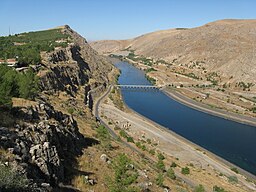
The Euphrates River is a lengthy waterway that traverses a significant portion of the Middle East. This body of water flows from the mountains of Turkey through the nations of Syria and Iraq and later joins the Tigris River before it reaches the Persian Gulf on the Iranian border. The Euphrates River once formed the eastern boundary of the ancient Roman Empire for several centuries, as well as the land God promised to Abraham’s descendants, the Jewish people (see Genesis 15:18).

Other ancient civilizations that controlled portions of the Euphrates river valley included the Hittites (the modern day inhabitants of Turkey), the Assyrians (modern day Syria), the Babylonians (modern day Iraq), and the Persians (modern day Iran). These people groups brought considerable adversity upon the nation of Israel during the Old Testament period. In addition, the Biblical book of Daniel chronicles the account of an angelic being who had been intercepted by a spiritual adversary who was identified as “the Prince of Persia” (see Daniel chapter ten, verses thirteen and twenty).

Therefore, it should not surprise us to learn that four demonic beings have been incarcerated within this area. And even though the locusts that were released from the Abyss were truly horrific, they only possessed the capability to inflict suffering and torment upon their victims. In contrast, the angelic beings seen here in Revelation 9:12-16 are executioners who hold the power to act upon their murderous intent.

Image Attribution : Alen Ištoković, CC BY 3.0, via Wikimedia Commons

VI

“Then the four angels who had been prepared for this hour, day, month, and year were set free to kill a third of humanity” (Revelation 9:15 NET).

We should not move past this portion of Scripture without giving serious thought to its content. First, notice that these four angels “…had been held ready for the hour, the day, the month and the year” (Phillips). This passage evokes the image of four predators, each pulling at the end of its restraint, ready to be unleashed at the right moment.

So how long had these entities been waiting for their opportunity to decimate one-third of the remaining human race? Was it years? Centuries? Millennia? Eons? Or perhaps longer? How long have these beings visualized, strategized, and planned for this opportunity? Once again, this passage reminds us that demonic entities are not like the roguish little troublemakers that appear in various forms of media. Instead, this portion of Scripture serves to illustrate their true nature.

“Now the number of the army of the horsemen was two hundred million; I heard the number of them” (Revelation 9:16).

So these angels seem to be the motivating force behind these armed forces. Nevertheless, an army comprising two hundred million troops would have been unimaginable when these words were first authored, for that figure likely encompassed the world’s entire population during that period. In fact, that number is significantly larger than the estimated 127 million people who comprised the collective armed forces of all the nations that took part in World War II.

Because of this, some commentators believe that Revelation 9:16 simply refers to a significant number of troops. However, the fact that the author of Revelation specifically tells us “I heard their number,” suggests that we should take this figure literally.

“And thus I saw the horses in the vision: those who sat on them had breastplates of fiery red, hyacinth blue, and sulfur yellow; and the heads of the horses were like the heads of lions; and out of their mouths came fire, smoke, and brimstone.

By these three plagues a third of mankind was killed–by the fire and the smoke and the brimstone which came out of their mouths. For their power is in their mouth and in their tails; for their tails are like serpents, having heads; and with them they do harm” (Revelation 9:17-19).

These references have led some to speculate that this passage refers to some sort of futuristic mechanized warfare. We’ll consider that possibility next.

VII

“For the power of the horses is in their mouths and in their tails, for their tails, which resemble snakes, have heads, and they inflict injury with them” (Revelation 9:19 HCSB).

If we associate these references from Revelation 9:17-19 with various forms of mechanized warfare, then these “breastplates” may translate to some form of protective gear. “Fire, smoke and sulfur” might describe the use of an ordinance launcher or similar type of armament. Revelation 9:19 also provides us with the following description: “The power of these horses is in their mouths and their tails” (GW). Whatever form that power takes, it clearly describes the use of front and rear mounted weaponry.

“But the rest of mankind, who were not killed by these plagues, did not repent of the works of their hands, that they should not worship demons, and idols of gold, silver, brass, stone, and wood, which can neither see nor hear nor walk. And they did not repent of their murders or their sorceries or their sexual immorality or their thefts” (Revelation 9:20-21).

This passage establishes a relationship between the “works of their hands” and the broader concept of worship. “Worship” signifies a profound act of reverence toward another person or thing. In also conveys the image of kissing one’s hand, just as one might do in the presence of royalty. (1) So those who survived the onslaught described in Revelation chapter nine stubbornly continued to offer the respect and reverence that is reserved for God alone to His enemies and/or inanimate objects.

That brings us to this reference to “…idols of gold, silver, bronze, stone, and wood, which cannot see, hear, or walk” (GNT). While idolatry may encompass a range of behaviors, we can associate an idol with anything we love, fear, or depend upon more than God. When something takes God’s place within our lives, that thing (whatever it is) effectively becomes an idol.

When we speak of idolatry, we are essentially referring to a question of misplaced priorities. For instance, let’s take the case of an individual who prioritizes the acquisition of financial wealth above all else. A person who prioritizes money in that manner is just as guilty of idolatry as those who worshipped “idols of gold, silver, brass, stone, and wood, which can neither see nor hear nor walk.” The same is true of anything that takes God’s place within our lives.

Objects of idolatry might include material possessions, positions of power or influence, or other human beings, to name a few examples. Therefore, we may rightfully classify anything that displaces the love and devotion that belongs to our Creator as an idol.

Image Attribution :unattributed, via Pixabay

(1) See G4352 – proskyneo – Strong’s Greek Lexicon (kjv). (n.d.). Blue Letter Bible. https://www.blueletterbible.org/lexicon/g4352/kjv/tr/0-1/


Revelation 9:20–21 — The Response of the Unrepentant

VIII

“The rest of mankind that were not killed by these plagues still did not repent of the work of their hands; they did not stop worshiping demons, and idols of gold, silver, bronze, stone and wood– idols that cannot see or hear or walk. Nor did they repent of their murders, their magic arts, their sexual immorality or their thefts” (Revelation 9:20-21 NIV).

The final verse of Revelation chapter nine references several unlawful or destructive behaviors. First among those behaviors is murder, or the unlawful killing of one human being by another. (1) While homicides come in various forms, these killings are clearly premeditated and would likely meet the legal threshold for first-degree murder in many jurisdictions.

The next item on our list from Revelation 9:21 is “magic arts” or “sorceries” (NKJV). Although we commonly associate these practices with witchcraft, they also encompass the use, or administering, of drugs.  (2)  These words are derived from the word pharmakeia in the original language of this passage, a word that serves as the basis of modern-day terms like “pharmacy” and “pharmaceutical.” In contrast to a contemporary pharmacy where qualified professionals dispense medicinal compounds to heal the sick and injured, this term carries a very different meaning…

“In ‘sorcery,’ the use of drugs, whether simple or potent, was generally accompanied by incantations and appeals to occult powers, with the provision of various charms, amulets, etc., professedly designed to keep the applicant or patient from the attention and power of demons, but actually to impress the applicant with the mysterious resources and powers of the sorcerer.” (3)

So this informative portion of Scripture tells us that any teaching or philosophy that involves the use of drugs to achieve an altered state of consciousness is not of God.

Next comes “sexual immorality.” This refers to any type of physical relationship that occurs outside of a Biblically valid marriage partnership. Jesus defined that standard for us in the following manner…

“…at the beginning of creation God ‘made them male and female.’ ‘For this reason a man will leave his father and mother and be united to his wife, and the two will become one flesh.’ So they are no longer two, but one. Therefore what God has joined together, let man not separate” (Mark 10:6-9 NIV).

This list of negative behaviors then closes with a reference to “thefts.” This word embodies the idea of a “thing stolen.” (3) While we might associate this idea with the actions of a bank robber or shoplifter, this concept applies to anyone who takes something that does not belong to them, regardless of their intent or the value of that item.

So the horrific events described here in Revelation chapter nine should underscore our need for prayerful self-examination to help ensure our lives are free from similar practices today.

(1) murder. (n.d.) American Heritage® Dictionary of the English Language, Third Edition, Copyright © 1992 by Houghton Mifflin Company.

(2) G5331 – pharmakeia – Strong’s Greek Lexicon (kjv). (n.d.). Blue Letter Bible. https://www.blueletterbible.org/lexicon/g5331/kjv/tr/0-1/

(3) G2809 – klemma – Strong’s Greek Lexicon (kjv). (n.d.). Blue Letter Bible. https://www.blueletterbible.org/lexicon/g2809/kjv/tr/0-1/

Featured Image: Joshua Keller, CC BY 2.0, via Wikimedia Commons

Revelation – Chapter Eight

About This Chapter: In Revelation chapter eight, the Lamb opens the seventh seal of the scroll. John first describes a period of silence in heaven, followed by a scene in which an angel offers incense with the prayers of the saints before the altar. After this, seven angels receive seven trumpets. As the first four trumpets are sounded, John sees a series of cataclysmic events that affect the earth, the sea, the rivers, and the heavens. The chapter concludes with a fearsome announcement that further trumpet blasts are yet to come.

Revelation 8:1–5 — The Seventh Seal and the Prayers of the Saints
Revelation 8:6–7 — The First Trumpet
Revelation 8:8–12 — The Second, Third, and Fourth Trumpets
Revelation 8:13 — Woe to the Inhabitants of the Earth


Revelation 8:1–5 — The Seventh Seal and the Prayers of the Saints

I

Earlier in Revelation chapter five, we read how Jesus, the Lamb of God, took a scroll with seven seals from the right hand of the one who sat upon a celestial throne. Six of those seven seals were opened in Revelation chapter six. The following chapter then unveiled a quartet of angels who restrained four destructive winds until God’s people were numbered and set apart. With the completion of that task, we now turn to chapter eight and the opening of the seventh and final seal…

“When He opened the seventh seal, there was silence in heaven for about half an hour. And I saw the seven angels who stand before God, and to them were given seven trumpets. Then another angel, having a golden censer, came and stood at the altar. He was given much incense, that he should offer it with the prayers of all the saints upon the golden altar which was before the throne.

And the smoke of the incense, with the prayers of the saints, ascended before God from the angel’s hand. Then the angel took the censer, filled it with fire from the altar, and threw it to the earth. And there were noises, thunderings, lightnings, and an earthquake” (Revelation 8:1-5).

Revelation chapter eight opens with a reference to “…silence in heaven for about half an hour” (NIV). So what is the meaning behind this period of silence? Well, this brief period of tranquility may foreshadow the turbulent events to follow, much like a lull that often proceeds a powerful and devastating storm. Once opened, this seal will unleash a horrifying chain of events. The scale of devastation and overwhelming nature of those events will seemingly render these heavenly observers speechless.

This passage continues by saying, “Then I saw the seven angels who stand in the presence of God; seven trumpets were given to them” (CSB). While trumpets are widely recognized for their use as musical instruments, they serve a different function in the context of Revelation chapter eight. In the Biblical era, trumpets were often used as a call to assembly, to signal an announcement, to summon military personnel, or to warn of an emergency condition.

In fact, modern-day societies still use various types of horns to direct our attention to a period of remembrance, an emergency situation, an alert condition, or a call to action. The trumpets we will encounter over the course of Revelation chapters eight, nine, and eleven will function in a similar manner, for they will serve as a summons and a warning.

Image Attribution : Speaker Simple Slash Speaker by Phosphor Icons


Revelation 8:6–7 — The First Trumpet

II

“Then another angel, having a golden censer, came and stood at the altar. He was given much incense, that he should offer it with the prayers of all the saints upon the golden altar which was before the throne. And the smoke of the incense, with the prayers of the saints, ascended before God from the angel’s hand” (Revelation 8:3-4).

Revelation 8:3 draws upon the imagery of an Old Testament-era priest and the sacrificial offerings of that period. For instance, the Biblical book of Leviticus tells us that some of the glowing embers from the altar were carefully transferred to a censer on the Day Of Atonement and combined with fragrant incense for presentation before the Lord (see Leviticus chapter sixteen).

While the Biblical Scriptures do not provide us with an exact description of a censer, it may have resembled a shovel-like object, a ladle, or a bowl-shaped device with an elongated handle. Since Revelation 5:8 earlier referenced “bowls” of incense, some form of that shape seems most likely. But more significant is the fact that this incense was offered “…with the prayers of all the saints.” Once again, this divine association of human prayer with the pleasing aroma of fragrant incense should encourage us to commune with God in prayer.

However, this reverent scene was about to change dramatically…

“Then the angel took the censer, filled it with fire from the altar, and threw it to the earth. And there were noises, thunderings, lightnings, and an earthquake. So the seven angels who had the seven trumpets prepared themselves to sound. The first angel sounded: And hail and fire followed, mingled with blood, and they were thrown to the earth. And a third of the trees were burned up, and all green grass was burned up” (Revelation 8:5-7).

In the original language of this passage, the phrase “burned up” conveys the image of something that has been burned to the ground or wholly consumed. (1) The prospect of one-third of our planet’s surface being destroyed in such a manner is difficult to fully grasp. For instance, consider the devastation that would be wrought by the incineration of the world’s pasture lands and one third of all trees. That figure might also encompass one third of the rice, wheat, and other grains that feed much of the world’s population.

The scope of such destruction is almost too terrible to contemplate. Finally, there is a reference to hail and fire mixed with blood. Whatever the precise meaning of that phrase, it is certain to be highly destructive as well.

Image Attribution : illustrators of the 1890 Holman Bible, Public domain, via Wikimedia Commons

(1) G2618 – katakaio – Strong’s Greek Lexicon (kjv). (n.d.). Blue Letter Bible. https://www.blueletterbible.org/lexicon/g2618/kjv/tr/0-1/


Revelation 8:8–12 — The Second, Third, and Fourth Trumpets

III

“Then the second angel sounded: And something like a great mountain burning with fire was thrown into the sea, and a third of the sea became blood. And a third of the living creatures in the sea died, and a third of the ships were destroyed” (Revelation 8:8-9).

The first global judgment of Revelation chapter eight affected the grass and trees. That was followed by a similar judgment upon the seas here in verses eight and nine. This catastrophic event was precipitated by “…what appeared to be a huge burning mountain [that] was thrown into the sea” (TLB). From a 21st century perspective, this appears to describe a meteorite or other stellar object entering the earth’s atmosphere prior to impact in one of the world’s oceans.

That event prompted the destruction of “…a third of the living creatures in the sea” (Revelation 8:9 NIV). Much like the previous judgment, the loss of one-third of the earth’s marine life would have a catastrophic effect on the food chain that sustains humanity. From the rancid odor of decaying fish to the collapse of various marine ecosystems, this act of judgment will bring an unprecedented level of devastation.

We should also note that one-third of all seafaring ships were destroyed in this event. With an untold number of sailing vessels throughout the globe, along with their passengers and crew, the human toll associated with this event will be immeasurable. That excludes the financial loss of any cargo that may have been aboard those vessels.

“Then the third angel sounded: And a great star fell from heaven, burning like a torch, and it fell on a third of the rivers and on the springs of water. The name of the star is Wormwood. A third of the waters became wormwood, and many men died from the water, because it was made bitter” (Revelation 8:10-11).

Verses ten to eleven describe another object falling from the sky. However, our author depicts this second item as “as great star” that was “burning like a torch.” This object thus appears to be less substantial than the one that resembled a “huge burning mountain.” Nevertheless, that was enough to poison one-third of the earth’s freshwater supply.

Verse eleven also adds some additional detail: The name of the star is Wormwood.” Wormwood is a type of plant that is described by one commentator in the following manner…

“Many species of wormwood (a woody herb) grow in Palestine, and all have a strong, bitter (but not poisonous) taste, which causes the plant to be used as a symbol of bitterness, sorrow, and calamity. This plague will make a third part of the fresh water supply of the earth unfit for human consumption.” (1)

Image Attribution: Hermann Adolf Köhler (1834 – 1879), Public domain, via Wikimedia Commons

(1) Ryrie, C. C. (1995). The Ryrie Study Bible. Note on Revelation 8:11


Revelation 8:13 — Woe to the Inhabitants of the Earth

IV

“Then the fourth angel sounded: And a third of the sun was struck, a third of the moon, and a third of the stars, so that a third of them were darkened. A third of the day did not shine, and likewise the night. And I looked, and I heard an angel flying through the midst of heaven, saying with a loud voice, ‘Woe, woe, woe to the inhabitants of the earth, because of the remaining blasts of the trumpet of the three angels who are about to sound!’” (Revelation 8:12-13).

In addition to the losses described in the previous verses of Revelation chapter eight, this passage tells us that there will be a thirty-three percent reduction in natural light. Whatever the cause, this will undoubtedly lead to negative changes in the areas of global meteorology, temperature, and agriculture, among others.

So now that we have reached the final verse of Revelation chapter eight, it may be helpful to perform a brief assessment. First, let’s consider the impact of these judgments upon humanity. Thus far, we have witnessed the loss of the earth’s grass surfaces, as well as a thirty-three percent reduction in the planet’s tree cover, marine life, seafaring vessels, freshwater supply, and natural light. It’s hard to imagine anything that could be worse than that.

Yet, the final verse of this chapter closes with an ominous statement: “…’Woe! Woe! Woe to those who live on the earth, because of the remaining trumpet blasts that the three angels are about to sound!’” (HCSB). While the judgments of Revelation chapter eight have been restricted to the natural realm, that will change as we enter Revelation chapter nine.

In the following chapter, we will encounter destructive spiritual forces that are far worse than anything we’ve seen to this point. In contrast to a video game or horror movie where gamers and viewers can easily leave the terrors of a virtual world, those who are alive during this period will face a succession of menacing, real-life, living nightmares.

But for now, Revelation chapter eight reminds us that God has blessed us with a variety of gifts that we may sometimes take for granted. For instance, what if our water was too polluted to drink? What if each day brought thirty-three percent less sunlight? What if a large percentage of the grass and trees in our neighborhoods were suddenly incinerated? What if farmers and ranchers produced one-third less food?

These essential elements of life, such as fresh air, sunshine, food to eat, and clean water, are blessings we shouldn’t take for granted. As we reflect upon these things and the ease with which they might vanish, we should grow in our sense of gratitude for the God who graciously blesses us.

Image Attribution :Smoke-darkened Sun, CC BY-NC 2.0, Linda in Fortuna, via flickr.com, disclaimer notice

Revelation – Chapter Seven

About This Chapter:Revelation chapter seven presents two scenes that appear between the opening of the sixth and seventh seals. Our author first sees four angelic beings holding back the four winds of the earth while another angel seals a group identified by number from the tribes of Israel. John then sees a vast multitude from every nation standing before the throne and before the Lamb, clothed in white robes and offering praise. The chapter records the worship of this great multitude and describes the comfort and care they receive in the presence of God.

Revelation 7:1–3 — The Angels Holding Back the Winds
Revelation 7:4–8 — The Numbered Group from the Tribes of Israel
Revelation 7:9–12 — The Great Multitude Before the Throne
Revelation 7:13–17 — The Explanation Of What John Saw


Revelation 7:1–3 — The Angels Holding Back the Winds

I

In Revelation chapter six, we saw how Jesus (identified as a lamb who was slain) took possession of a scroll with seven seals. Six of those seals were opened in chapter six, each with a corresponding action on earth. The first four seals produced horsemen who brought conquest, war, economic hardship, and widespread death. The fifth seal brought forth the souls of those who had given their lives for Christ.

The sixth seal brought environmental destruction, a tremendous earthquake, and a description of a potential nuclear engagement or some type of meteoric impact. Many scholars associate the opening of these seals with the beginning of what has come to be known as “The Great Tribulation.” This corresponds to the timeframe Jesus spoke of in Matthew chapter twenty-four: “For then there will be great tribulation, such as has not been since the beginning of the world until this time, no, nor ever shall be. And unless those days were shortened, no flesh would be saved…” (Matthew 24:21-22).

Revelation chapter six then continued with a description of the human response to those events: “They called to the mountains and the rocks, ‘Fall on us and hide us from the face of the one seated on the throne and from the Lamb’s wrath!’” (Revelation 6:16 CEB). So those who experienced these catastrophic incidents recognized God’s intervention. However, that recognition prompted them to hide rather than repent. Instead of seeking God’s forgiveness in Christ, these individuals attempted to flee and go into hiding. But these was no escape for them, as is true of everyone.

That chapter subsequently closed by saying, “For the great day of their wrath has come, and who can withstand it?” (Revelation 6:17 NIV). That’s a good question and the answer comes in chapter seven…

“After these things I saw four angels standing at the four corners of the earth, holding the four winds of the earth, that the wind should not blow on the earth, on the sea, or on any tree.

Then I saw another angel ascending from the east, having the seal of the living God. And he cried with a loud voice to the four angels to whom it was granted to harm the earth and the sea, saying, ‘Do not harm the earth, the sea, or the trees till we have sealed the servants of our God on their foreheads’” (Revelation 7:1-3).

Revelation chapter seven represents something of a break in the action before the seventh and final seal is opened in the following chapter. But first, we will receive some insight regarding other events that are taking place during this time.


Revelation 7:4–8 — The Numbered Group from the Tribes of Israel

II

Revelation 7:1 begins by saying, “After this I saw four angels standing at the four corners of the earth…” This reference to the “four corners of the earth” represents each of the four compass points of the globe. Those angels were responsible for “…holding back the four winds of the earth so no wind could blow on the earth, on the sea, or on any tree” (NET). The “winds” referenced in this passage convey the idea of a violent agitation, a stream of air, or a strong tempestuous wind. (1)

“Then I saw another angel ascending from the east, having the seal of the living God. And he cried with a loud voice to the four angels to whom it was granted to harm the earth and the sea, saying, “Do not harm the earth, the sea, or the trees till we have sealed the servants of our God on their foreheads” (Revelation 7:2-3).

Revelation chapter six earlier closed with the following question: “That terrible day has come! God and the Lamb will show their anger, and who can face it” (Revelation 6: 17 CEV). That answer comes here in Revelation 7:3: “… those who serve our God” (CEB). In addition, we’re also told that each of these servants of God received an identifying seal.

In this context, a “seal” refers to a stamp bearing a private mark that was used for security purposes or document preservation. (2) This seal functioned as a form of identification that marked each bearer as “God’s property” and kept them safe from harm. Verses four to eight then go on to provide us with some additional information regarding these individuals…

“Then I heard the number of those who were sealed: one hundred forty-four thousand, sealed from every tribe of the Israelites: From the tribe of Judah, twelve thousand were sealed” (Revelation 7:4-5, and following).

The Old Testament patriarch Jacob fathered twelve sons whose families went on to form the twelve tribes of Israel. Jacob’s son, Joseph, also had two sons named Ephraim and Manasseh. These sons were later “adopted” by Jacob and added to this tribal list. Of these fourteen tribes, twelve are always selected in varying combinations.

Revelation 7:4-8 represents one such example. That list of twelve tribes includes Joseph’s son Manasseh, while Jacob’s son Dan is omitted, perhaps due to that tribe’s prophetic reputation for treachery (Genesis 49:17). Taken together, these individuals represent 144,000 Messianic Christians who will receive supernatural protection from God when He unleashes His wrath upon a world that has rejected Him.

Image Attribution: ElfQrin, CC BY-SA 3.0, via Wikimedia Commons

(1) G417 – anemos – Strong’s Greek Lexicon (kjv). (n.d.). Blue Letter Bible. https://www.blueletterbible.org/lexicon/g417/kjv/tr/0-1/

(2) G4972 – sphragizo – Strong’s Greek Lexicon (kjv). (n.d.). Blue Letter Bible. https://www.blueletterbible.org/lexicon/g4972/kjv/tr/0-1/


Revelation 7:9–12 — The Great Multitude Before the Throne

III

“After these things I looked, and behold, a great multitude which no one could number, of all nations, tribes, peoples, and tongues, standing before the throne and before the Lamb, clothed with white robes, with palm branches in their hands, and crying out with a loud voice, saying, ‘Salvation belongs to our God who sits on the throne, and to the Lamb!’

All the angels stood around the throne and the elders and the four living creatures, and fell on their faces before the throne and worshiped God, saying: ‘Amen! Blessing and glory and wisdom, Thanksgiving and honor and power and might, Be to our God forever and ever. Amen’” (Revelation 7:9-12).

The book of Revelation presents us with a fast-paced narrative, full of constantly shifting events. For instance, compare the following excerpt from Revelation chapter seven with a passage from earlier in Revelation chapter six…

“I saw under the altar the souls of those who had been slain for the word of God and for the testimony which they held…. Then a white robe was given to each of them; and it was said to them that they should rest a little while longer, until both the number of their fellow servants and their brethren, who would be killed as they were, was completed” (Revelation 6:9,11).

“After this I looked, and there was a vast multitude from every nation, tribe, people, and language, which no one could number, standing before the throne and before the Lamb. They were clothed in white robes with palm branches in their hands” (Revelation 7:9 CSB).

The white robes worn by the groups mentioned in Revelation chapters six and seven suggest that a relationship exists between them. However, the interval between these chapters has also brought significant changes. For instance, these individuals were under God’s altar in Revelation chapter six. But now, they stood before His throne. This group raised a poignant question in the previous chapter: “How long, O Lord, holy and true, until You judge and avenge our blood on those who dwell on the earth?” (Revelation 6:10). But now, they held palm branches, a symbol of victory and triumph.

Furthermore, we should note that these individuals hailed from every nation, tribe, and people. The members of this culturally diverse group also represented native speakers of every human language. This is deeply significant, for it tells us that salvation in Christ is not limited to a specific ethno-cultural group. Instead, He invites disciples from every nation, tribe, people and language.

Finally, John, our author, has served as an observer to the events that have taken place up to this point. But as we’ll see, he is about to transition from an observer to an active participant in these events.

Image Attribution: borges, CC0, via Wikimedia Commons


Revelation 7:13–17 — The Explanation Of What John Saw

IV

“Then one of the elders answered, saying to me, ‘Who are these arrayed in white robes, and where did they come from?’ And I said to him, ‘Sir, you know.’

So he said to me, ‘These are the ones who come out of the great tribulation, and washed their robes and made them white in the blood of the Lamb. Therefore they are before the throne of God, and serve Him day and night in His temple. And He who sits on the throne will dwell among them.

They shall neither hunger anymore nor thirst anymore; the sun shall not strike them, nor any heat; for the Lamb who is in the midst of the throne will shepherd them and lead them to living fountains of waters. And God will wipe away every tear from their eyes’” (Revelation 7:13-17).

To this point, our author’s perspective on the Book of Revelation has been that of an observer. However, a question posed by one of these elders drew him into these events as they were taking place: “’Who are these people wearing white robes, and where did they come from?’” (CEB). While this elder could have simply relayed this information to John, our author, it seems that he preferred to engage him as a participant in this question-and-answer exchange. That brief discussion went far beyond a simple exchange of information, for it offers a surprising degree of insight for those who are willing to examine it closely.

Although the book of Revelation is widely known for its apocalyptic imagery, our text from Revelation 7:16-17 offers a comforting message of assurance. For example, God may often feel distant as we navigate the challenges and obstacles of everyday life. But this passage tells us that God will dwell among His people in eternity, thus encouraging us to look forward in the face of our daily hardships.

As we’re reminded in the New Testament book of 1 Corinthians, “Now we see things imperfectly, like puzzling reflections in a mirror, but then we will see everything with perfect clarity. All that I know now is partial and incomplete, but then I will know everything completely, just as God now knows me completely” (1 Corinthians 13:12 NLT).

We also have the following promise: “They will never hunger or thirst again, and they won’t be troubled by the sun or any scorching heat” (CEV). Hunger and thirst are sensations that virtually everyone can relate to. Many can empathize with the discomfort of a sunburn or can identify with the experience of being outdoors in the scorching daytime heat. But what if we never had to experience such things again? Those experiences will be a thing of the past once we enter the realm of eternity.

Image Attribution: “Through a glass darkly” by fotologic is licensed under CC BY 2.0.

Revelation – Chapter Six

About This Chapter: Revelation chapter six continues as the Lamb begins to open the seals of the scroll introduced in the previous chapter. As each seal is opened, John witnesses a series of fateful events. The first four seals bring the appearance of four horsemen. The fifth seal reveals the souls of those who had been killed for their testimony, crying out from beneath the altar. When the sixth seal is opened, John sees dramatic disturbances affecting the earth and sky, while people across the globe attempt to hide themselves from the One who is seated on the throne and the Lamb.

Revelation 6:1–8 — The First Four Seals and the Four Horsemen
Revelation 6:9–11 — The Fifth Seal: The Souls Beneath the Altar
Revelation 6:12–14 — The Sixth Seal and the Disturbances in Heaven and Earth
Revelation 6:15–17 — The Response of Those Who Live Upon the Earth


Revelation 6:1–8 — The First Four Seals and the Four Horsemen

I

The first eight verses of Revelation chapter six introduce four figures who have come to be known as The Four Horsemen Of The Apocalypse…

“Now I saw when the Lamb opened one of the seals; and I heard one of the four living creatures saying with a voice like thunder, ‘Come and see.’ And I looked, and behold, a white horse. He who sat on it had a bow; and a crown was given to him, and he went out conquering and to conquer.

When He opened the second seal, I heard the second living creature saying, ‘Come and see.’ Another horse, fiery red, went out. And it was granted to the one who sat on it to take peace from the earth, and that people should kill one another; and there was given to him a great sword.

When He opened the third seal, I heard the third living creature say, ‘Come and see.’ So I looked, and behold, a black horse, and he who sat on it had a pair of scales in his hand. And I heard a voice in the midst of the four living creatures saying, ‘A quart of wheat for a denarius, and three quarts of barley for a denarius; and do not harm the oil and the wine.’

When He opened the fourth seal, I heard the voice of the fourth living creature saying, ‘Come and see.’ So I looked, and behold, a pale horse. And the name of him who sat on it was Death, and Hades followed with him. And power was given to them over a fourth of the earth, to kill with sword, with hunger, with death, and by the beasts of the earth” (Revelation 6:1-8).

Earlier in Revelation chapter five, we read how Christ, the Lamb of God, “…came and took the scroll from the right hand of him who sat on the throne” (Revelation 5:7 NIV). Seven seals secured that scroll, and the Lamb was the only one who could open them. He will release six of those seven seals here in Revelation chapter six. The seventh and final seal will be opened later in chapter eight.

An identical command accompanied the opening of each of the first four seals: “Come and see.” And much like the Apostle John in the book of Revelation, we are also invited to see these emerging horsemen for ourselves. But despite the vivid descriptions of these riders, their identities have been the subject of great debate down through the centuries. We’ll take a closer look at the first horseman of the apocalypse beginning next.

Image Attribution : Viktor Vasnetsov, Public domain, via Wikimedia Commons

II

“And I looked, and behold, a white horse! And its rider had a bow, and a crown was given to him, and he came out conquering, and to conquer” (Revelation 6:2 ESV).

Let’s consider the first horseman described for us here in Revelation 6:2. This rider is mounted on a white horse, a traditional symbol of purity, honor, and virtue. He also carries a bow, a weapon that speaks of hunting or warfare. Our text then mentions a crown that features two items of note…

  1. The first horseman did not initially possess this crown; it was given to him.

  2. This crown was not a royal crown, but a wreath or garland that was typically awarded to the winner of an athletic event.

Finally, we’re told that our first horseman “…rode out as a conqueror bent on conquest” (NIV). This alludes to someone who defeats and subjugates others.

With these things in mind, let’s consider the potential identity of this horseman. For instance, some associate this rider with Jesus, based on the following passage from Revelation chapter nineteen…

“Now I saw heaven opened, and behold, a white horse. And He who sat on him was called Faithful and True, and in righteousness He judges and makes war. His eyes were like a flame of fire, and on His head were many crowns. He had a name written that no one knew except Himself. He was clothed with a robe dipped in blood, and His name is called The Word of God” (Revelation 19:11-14).

We know with certainty that Jesus is the subject of this passage from Revelation chapter nineteen, for His name is “the Word of God.” That correlates with a well-known portion of Scripture from John 1:1: “In the beginning was the Word and the Word was with God and the Word was God.” These details enable us to compare the figures mentioned in these texts…

Revelation Chapter Six

Revelation Chapter Nineteen

Emerges from the first seal. Emerges from heaven.
Rides a white horse. Rides a white horse.
Possesses a bow for a weapon. Possesses a sword for a weapon.
Has a single crown that signifies an athletic victory. Has many crowns of royal authority.
Is a conqueror bent on conquest. Engages in warfare with righteousness.

Although similarities seem to exist between these figures, they are not the same. Thus, we should consider the possibility that the horseman who emerges from the first seal of Revelation chapter six is someone who resembles Jesus, but isn’t. This should also prompt us to recall Jesus’ warning from Matthew 24:23-25…

“At that time if anyone says to you, ‘Look, here is the Christ!’ or, ‘There he is!’ do not believe it. For false Christs and false prophets will appear and perform great signs and miracles to deceive even the elect– if that were possible. See, I have told you ahead of time” (NIV).

III

“When the Lamb opened the second seal, I heard the second living creature say, ‘Come!’ Then another horse came out, a fiery red one. Its rider was given power to take peace from the earth and to make men slay each other. To him was given a large sword” (Revelation 6:3-4 NIV).

Red is a color that is frequently used to represent conflict or war. This is the color that served to distinguish the horse ridden by the Second Horseman Of The Apocalypse here in Revelation chapter six. We should also note that this rider’s horse wasn’t simply red; it was fiery red. Furthermore, this horseman didn’t simply carry a sword; he wielded a large one, presumably with the capacity to destroy large numbers of people quickly and efficiently.

“When the Lamb opened the third seal, I heard the third living creature say, ‘Come!’ I looked, and there before me was a black horse! Its rider was holding a pair of scales in his hand” (Revelation 6:5 NIV).

The color black offers a clear association with the characteristic qualities of sadness, death, or mourning. But what do the scales held by this horseman signify? The following verse offers a potential answer…

“Then I heard what sounded like a voice among the four living creatures, saying, ‘A quart of wheat for a day’s wages, and three quarts of barley for a day’s wages, and do not damage the oil and the wine!’” (Revelation 6:6 NIV).

A quart of wheat might feed a single person for a day. Given that people commonly use scales to determine the weight of various objects, this seems to indicate that essential provisions (like bread) may be subject to rationing. So if we were to rephrase this passage in contemporary terms, we might say that these economic conditions will deteriorate to the point where people will have to labor for an entire day in order to feed themselves.

However, it also seems that such limitations will not apply to everyone during this period, for this passage also includes the following aside: “…do not damage the oil and the wine!” While oil and wine were staples of ancient life, one could get along without them if necessary. From that perspective, these items were viewed as luxuries, not necessities.

This suggests that a sizable economic divide will exist between those who can afford such things and those who cannot. Some will be subject to economic devastation during that time while others will retain the ability to maintain their self-indulgent standards of living.

IV

“When he opened the fourth seal, I heard the voice of the fourth living creature say, ‘Come!’ And I looked, and behold, a pale horse! And its rider’s name was Death, and Hades followed him. And they were given authority over a fourth of the earth, to kill with sword and with famine and with pestilence and by wild beasts of the earth” (Revelation 6:7-8).

The fourth and final Horseman Of The Apocalypse is the only one to be named: Death. Thus, we can view this horseman as death personified. And much like a harvester that follows a reaper in a grain field, the abode of the dead (or Hades), followed behind.

Revelation 6:8 details the instruments of death employed by this horseman: the sword (or death through war and human violence), famine (or death through starvation), pestilence (or death through disease), and wild beasts of the earth (or death through an attacking animal). We’re also told “They were given authority over a fourth of the earth…” (CEB). This brief piece of information deserves more than just a cursory glance.

You see, it’s difficult to grasp the magnitude of humanity represented by twenty-five percent of the world’s population. For instance, the loss of a quarter of the global population would translate to approximately 1.5 billion people. If we were to count to that total at a rate of one number per second, it would take us over three decades to complete the task.

To put it another way, 1.5 billion people exceeds the current human population of North America, Central America, and South America combined. (1) That number is terrifying to contemplate, and puts Jesus’ message from Matthew 24:21-22 into perspective: “For then there will be great tribulation, such as has not been since the beginning of the world until this time, no, nor ever shall be. And unless those days were shortened, no flesh would be saved…”

So the Four Horsemen Of The Apocalypse depart, and the focus of our text will now shift dramatically to the souls of those who perished for their commitment to God’s Word…

“When He opened the fifth seal, I saw under the altar the souls of those who had been slain for the word of God and for the testimony which they held. And they cried with a loud voice, saying, ‘How long, O Lord, holy and true, until You judge and avenge our blood on those who dwell on the earth?’

Then a white robe was given to each of them; and it was said to them that they should rest a little while longer, until both the number of their fellow servants and their brethren, who would be killed as they were, was completed” (Revelation 6:9-11)

This passage has important implications for our beliefs concerning the afterlife. We’ll consider some of those implications next.

(1) As of 31 December, 2024. See What Is The Combined Population Of North America, Central America, And South America?


Revelation 6:9–11 — The Fifth Seal: The Souls Beneath the Altar

V

“When he opened the fifth seal, I saw under the altar the souls of those who had been slain for the word of God and for the witness they had borne. They cried out with a loud voice, ‘O Sovereign Lord, holy and true, how long before you will judge and avenge our blood on those who dwell on the earth?’” (Revelation 6:9-10 ESV).

There are those who subscribe to the belief that human beings transition to a formless oblivion when they depart from this earthly life. That realm is said to encompass a state where consciousness ends and individual identities disappear. But let’s consider that view in relation to our text from Revelation 6:9-10.

We should first note that the people described in this passage did not cease to exist at the end of their mortal lives. Equally significant is the fact that they were not absorbed into a “universal consciousness” when they passed from this life. Instead, their individual identities clearly remained. Finally, they also retained the ability to think, speak, feel, and remember. This passage thus reveals an important truth concerning the afterlife: while death may represent the end of our physical lives, it does not represent the end of us.

The presence of these souls beneath the altar suggests a link to those sacrificial offerings that were poured out at the base of the altar in the Old Testament era. In a similar manner, these individuals sacrificed their lives “…for the word of God, and for the testimony which they held” (KJV). Nevertheless, they also presented the almighty God with a forthright question: “…’Master, you are holy and faithful! How long will it be before you judge and punish the people of this earth who killed us?’” (CEV). That question led to the following response…

“Then they were each given a white robe and told to rest a little longer, until the number of their fellow servants and their brothers should be complete, who were to be killed as they themselves had been” (Revelation 6:11).

Revelation 6:11 reminds us that we may also be called upon to exercise patience when others commit injustices against us. Although patience often represents a challenging virtue, its important to recognize that God’s justice may unfold on a timetable that is influenced by factors that are beyond our immediate comprehension. Nevertheless, we can be certain that God will vindicate us if we allow Him to do so according to His divine schedule.

Therefore, we would do well to remember the truth that underlies an ancient adage: “The wheels of God’s justice grind slowly, but they grind exceedingly fine.


Revelation 6:12–14 — The Sixth Seal and the Disturbances in Heaven and Earth

VI

“I looked when He opened the sixth seal, and behold, there was a great earthquake; and the sun became black as sackcloth of hair, and the moon became like blood. And the stars of heaven fell to the earth, as a fig tree drops its late figs when it is shaken by a mighty wind. Then the sky receded as a scroll when it is rolled up, and every mountain and island was moved out of its place.

And the kings of the earth, the great men, the rich men, the commanders, the mighty men, every slave and every free man, hid themselves in the caves and in the rocks of the mountains, and said to the mountains and rocks, ‘Fall on us and hide us from the face of Him who sits on the throne and from the wrath of the Lamb! For the great day of His wrath has come, and who is able to stand?’” (Revelation 6:12-17).

18 May, 1980, witnessed the cataclysmic eruption of Mount St. Helens, a volcanic mountain in the western United States. Triggered by an earthquake that registered at 5.1 on the Richter scale, the lateral blast emanating from the mountain’s northern flank ripped through the surrounding landscape at an astonishing speed of 300 miles per hour (483 kph). That eruption produced a 230 square mile (370 square km) periphery of devastation that extended 17 miles (27 km) from the crater. It also produced a vertical eruption of gas and ash that reached 16 miles (26 km) into the atmosphere. 57 people lost their lives in the devastation that followed. (1)

In the late 1800s, the Indonesian island of Krakatoa experienced a volcanic eruption that ranks among history’s most catastrophic natural disasters. Krakatoa’s eruption in August, 1883, generated devastating tsunamis up to 130 feet (40m) high. In its final stages, the noise produced by the exploding volcano was heard thousands of miles away in Australia. The immense power of the volcano’s eruption resulted in the near-total destruction of Krakatoa, along with several nearby islands. It also led to an estimated death toll of more than 36,000 people. (2)

Many centuries earlier, in 79 A.D., the eruption of Mount Vesuvius devastated the ancient Roman cities of Pompeii and Herculaneum in southern Italy. A deluge of volcanic ash and pumice stones engulfed those urban areas, prompting many residents to flee and others to seek shelter. Those who remained in Pompeii were subsequently killed when a cloud of toxic gas engulfed the city. Today, one can tour the architectural ruins of Pompeii and view casts taken of some of those individuals as they faced their final moments of life. (3)

These historical accounts should thus encourage us to approach our text from Revelation 6:12-17 with reverence and seriousness as we seek to honor God with our lives today.

(1) The Editors of Encyclopaedia Britannica. (2024, November 17). Mount Saint Helens | Location, eruption, Map, & Facts. Encyclopedia Britannica. https://www.britannica.com/place/Mount-Saint-Helens  Image Attribution: U.S. government, Public domain, via Wikimedia Commons

(2) Roller, S. (n.d.). 10 Facts About the Eruption of Krakatoa. History Hit. https://www.historyhit.com/facts-about-the-eruption-of-krakatoa/  Image Attribution: Lithograph: Parker & Coward, Britain;, Public domain, via Wikimedia Commons

(3) Sullivan, M. (2024, August 23). Mount Vesuvius erupts. HISTORY. https://www.history.com/this-day-in-history/vesuvius-erupts  Image Attribution: See page for author, CC BY 4.0, via Wikimedia Commons


Revelation 6:15–17 — The Response of Those Who Live Upon the Earth

VII

“and the stars of the sky fell to the earth as the fig tree sheds its winter fruit when shaken by a gale. The sky vanished like a scroll that is being rolled up, and every mountain and island was removed from its place” (Revelation 6:13-14 ESV).

The meaning of the phrase “stars falling to earth” is widely debated. Theories range from stellar objects, to ballistic missiles, to the atmospheric descent of molten rock that had been propelled into the sky by volcanic activity. Then there is this reference to the sky “rolling up” and “receding like a scroll.” Many associate this idea with the image of a mushroom cloud that accompanies the use of nuclear weaponry, or the devastating impact of a cosmic object.

Regardless of the source, these horrific events led to a universal response…

“Then everyone–the kings of the earth, the rulers, the generals, the wealthy, the powerful, and every slave and free person–all hid themselves in the caves and among the rocks of the mountains. And they cried to the mountains and the rocks, ‘Fall on us and hide us from the face of the One who sits on the throne and from the wrath of the Lamb. For the great day of their wrath has come, and who is able to survive?’” (Revelation 6:15-17 NLT).

Even if we view this passage with a sense of emotional detachment, we should not overlook the dread and terror these events generated. We should also note the wide variety of individuals who shared that emotional response:

  • The kings of the earth, the rulers (or government representatives).
  • The generals (military personnel).
  • The wealthy (those who possessed great financial resources).
  • The powerful (the upper classes).
  • Every slave (the lower classes).
  • Every free man (a term that effectively encompasses everyone else).

So everyone, no matter what their station in life, will be affected by these events. Finally, this portion of Scripture tells us that those who were impacted by the opening of the sixth seal knew exactly who was responsible for these events as they unfolded: “…’Hide us from the one who sits on the throne and from the anger of the Lamb. That terrible day has come! God and the Lamb will show their anger, and who can face it?’” (CEV).

Instead of acknowledging their sinful behavior with an attitude of repentance, these individuals attempted to run and hide. But there was nowhere to run or hide. Thus, we should learn from their example and avoid repeating these mistakes.

Revelation – Chapter Five

About This Chapter: Revelation chapter five continues the vision of the heavenly throne room introduced in the previous chapter. In the hand of the One seated on the throne is a scroll sealed with seven seals. When no one is found worthy to open it, John weeps until he is shown that the Lion of the tribe of Judah—the Lamb who was slain— who alone has authority to reveal and carry out God’s plan. The chapter culminates in a powerful scene of worship as the living creatures, the elders, the angels, and all creation give honor and praise to the Lamb and to the One seated on the throne.

Revelation 5:1–4 — The Scroll Sealed with Seven Seals
Revelation 5:5–7 — The Lamb Takes the Scroll
Revelation 5:8–10 — The Song of the Living Creatures and the Elders
Revelation 5:13–14 — All Creation Worships


Revelation 5:1–4 — The Scroll Sealed with Seven Seals

I

Our previous study in Revelation chapter four directed our attention to the throne of God. Here now, in Revelation chapter five, we will be introduced to a mysterious scroll held by the One who sat upon that throne…

“Then I saw in the right hand of him who sat on the throne a scroll with writing on both sides and sealed with seven seals.

And I saw a mighty angel proclaiming in a loud voice, ‘Who is worthy to break the seals and open the scroll?’ But no one in heaven or on earth or under the earth could open the scroll or even look inside it. I wept and wept because no one was found who was worthy to open the scroll or look inside” (Revelation 5:1-4 NIV).

Much like a camera that zooms in on one aspect of an image, the beginning of our text from Revelation 5:1 shifts our attention to the right hand of God. This detail is rooted in an ancient symbol of power and dominion. Since the right hand serves as the dominant hand for most of the world’s population, this imagery grew to exemplify the idea of skill and/or strength.

This eventually led to a further association with the related concepts of sovereignty and dominion. The enduring legacy of this ancient metaphor survives today in the idea of a trusted assistant who serves as the “right hand” of an authority figure. An individual who fits that description is someone who is as indispensable as that person’s own right hand.

This passage then continues with an important detail regarding this scroll, for we are told that it was inscribed on both sides. Although ancient scrolls were typically single-sided, many commentators note that title deeds formed an exception. For instance, the inner portion of a title deed offered a description of the property in question. If a financial hardship led to the sale of that property, the amount owed and repayment terms were written on the outside. Once that information was transcribed, the scroll was refastened with strings and sealed with wax over the knots for security purposes.

When the debtor’s financial situation improved, he or she could approach the elders of the city with a petition to repurchase the property. The elders would examine the document and approve the purchase if the debtor met the required obligation. But even if someone couldn’t afford to redeem his or her property, a family relative could step in and do it for them. We’ll consider the role of that relative and how it relates to our text from Revelation chapter five next.

Image Attribution: unbekannt, CC BY-SA 4.0, via Wikimedia Commons

II

“Then I saw in the right hand of him who was seated on the throne a scroll written within and on the back, sealed with seven seals. And I saw a mighty angel proclaiming with a loud voice, ‘Who is worthy to open the scroll and break its seals?’

And no one in heaven or on earth or under the earth was able to open the scroll or to look into it, and I began to weep loudly because no one was found worthy to open the scroll or to look into it” (Revelation 5:1-4 ESV).

An ancient debtor who lacked the financial resources needed to redeem a piece of property could turn to a relative to do so on his or her behalf. That relative was known as a Kinsman Redeemer. Anyone who aspired to fulfill that role had to meet three qualifications:

  1. He had to maintain a family relationship to the debtor.
  2. He had to possess the resources necessary to settle the debtor’s financial obligation.
  3. He had to express a willingness to act in that capacity.(1)

So what does this have to do with the scroll in the right hand of the One who sat upon this throne? Well, the double-sided inscription on this scroll suggests that it functioned as a legal document pertaining to property rights. If so, then we should consider the possibility that it served as a title deed to this world. Consider the following sequence of events in support of this idea:

  • This world was “deeded” to Adam in the Garden of Eden when God directed him to subdue the Earth (Genesis 2:15-17).
  • Adam forfeited that obligation (and those of his descendants) when he disobeyed God’s directive at His enemy’s behest (Genesis chapter three).
  • Adam’s forfeiture enabled that enemy to assume property management responsibilities, so to speak. This explains why Satan is called “the god of this world” (2 Corinthians 4:3-4) and “the ruler of this world” (by Jesus) in John 12:31.

However, Revelation 5:2-4 alerts us to a seemingly insurmountable problem: “And I saw a strong angel, who shouted with a loud voice: ‘Who is worthy to break the seals on this scroll and open it?’ But no one in heaven or on earth or under the earth was able to open the scroll and read it. Then I began to weep bitterly because no one was found worthy to open the scroll and read it” (NLT).

So John, our author, wept with disappointment at the fact that no one seemed to possess the authority to break these seals. However, a Kinsman Redeemer was about to make His presence known.

(1) The most prominent Biblical illustration of the function of a Kinsman Redeemer appears in the Book of Ruth


Revelation 5:5–7 — The Lamb Takes the Scroll

III

“But one of the elders said to me, ‘Do not weep. Behold, the Lion of the tribe of Judah, the Root of David, has prevailed to open the scroll and to loose its seven seals’”

And I looked, and behold, in the midst of the throne and of the four living creatures, and in the midst of the elders, stood a Lamb as though it had been slain, having seven horns and seven eyes, which are the seven Spirits of God sent out into all the earth. Then He came and took the scroll out of the right hand of Him who sat on the throne” (Revelation 5:5-7).

As we move through our narrative in Revelation chapter five, it may be helpful to view this scene from the perspective of John, our author. For instance, John learned that the Lion of the tribe of Judah had prevailed to open the scroll possessed by the One who was seated on the throne. Given that description, John likely expected to encounter a being of immense power and strength. That assessment would prove accurate, but not in the way he may have expected.

For example, we’re told, “Then I saw a Lamb, looking as if it had been slain, standing at the center of the throne…” (NIV). This was far from the image of a powerful lion. Nevertheless, this reference is more readily understood when we remember that the New Testament often portrays Jesus as a lamb. More than two dozen of those references appear in the book of Revelation alone. He also functions as the Kinsman Redeemer for humanity referenced earlier.

While we may ordinarily sympathize with a lamb that appeared as if it had been slain, this Lamb was different: “He had seven horns and seven eyes, which are the seven spirits of God sent into all the earth” (CSB). This brings us to another interpretive crossroad within the book of Revelation, for each reader must prayerfully determine how to understand and apply this passage.

Many artistic renderings of these verses depict the lifelike image of a seven-eyed, seven-horned sacrificial lamb. But as we choose our interpretive path through the Book of Revelation, we should pause to remember that the number seven is often used to represent the idea of perfection or completion. This seems to present a better interpretive option as we consider this passage from Revelation 5:6.

We should also avoid isolating this passage from its first-century historical context. From a first century perspective, the sight of an ox or bull with lethal horns presented a formidable image of power and strength. Thus, the word “horn” came to represent those qualities. The imagery of seven horns can thus be used to symbolize the idea of immeasurable power. In a similar manner, we can understand these references to “eyes” and the “seven Spirits of God” as symbolic references to the Lamb’s omniscience.

Image Attribution : Pratyya Ghosh, CC BY 3.0, via Wikimedia Commons


Revelation 5:8–10 — The Song of the Living Creatures and the Elders

IV

“And when he had taken it, the four living creatures and the twenty-four elders fell down before the Lamb. Each one had a harp and they were holding golden bowls full of incense, which are the prayers of the saints.

And they sang a new song: ‘You are worthy to take the scroll and to open its seals, because you were slain, and with your blood you purchased men for God from every tribe and language and people and nation. You have made them to be a kingdom and priests to serve our God, and they will reign on the earth” (Revelation 5:8-10 NIV).

One of the more common illustrations of the heavenly realm features angelic beings who float among the clouds while gently strumming harps. That imagery is likely derived (at least in part) from our text here in Revelation 5:8. Nevertheless, this verse highlights an important element that we might easily overlook: the depiction of the prayers offered by God’s people as golden bowls filled with fragrant incense.

In an age where leftover meals are commonly stored in cheap plastic containers, this portrait of a golden bowl illustrates the tremendous value God places upon our prayers. In addition, the fact that God associates our petitions and intercessions with the pleasing aroma of sweet-smelling incense should encourage us to seek Him in prayer each day. As we do so, we have a fresh opportunity to contribute to the “prayerful incense” alluded to in this passage.

These verses also present us with another insight that holds significant implications: “…by your blood you ransomed people for God from every tribe and language and people and nation and you have made them a kingdom and priests to our God” (ESV). This portion of Scripture tells us that people from every societal demographic throughout human history will join their Creator in eternity.

Since no one can come to God the Father except through Christ (John 14:6), this can be challenging to reconcile with those people groups throughout history who have never heard of Jesus. The late Biblical scholar Dr. Norman Geisler helps brings clarity to that question…

“God has many ways to get the truth about salvation through Christ to those who seek Him. He can send a missionary (Acts 10), or a Bible (Ps. 119:130), give them a vision (Dan. 2:7), or send an angel (Rev. 14). But those who turn their back on the light they have (through nature) and find themselves lost in darkness, have no one to blame but themselves.” (1)

Image Attribution : Mattana, CC BY 2.0, via Wikimedia Commons

(1) Geisler, Dr. Norman. When Critics Ask : A Popular Handbook On Bible Difficulties [pg.29]

V

“You have made them to be a kingdom and priests to serve our God, and they will reign on the earth” (Revelation 5:10 NIV).

While the Biblical book of Revelation is widely recognized for its apocalyptic images of the future, there are certain portions of this book that are surprisingly practical. Jesus’ letters to the seven churches of Revelation chapters two and three represent one such portion. Our text from Revelation 5:10 represents another.

For instance, consider the passage quoted above: “You have appointed them as a kingdom and priests to serve our God, and they will reign on the earth” (NET). In contemporary terms, this passage tells us that God has appointed His people to intercessory responsibilities now and oversight responsibilities in the future.

In light of those responsibilities, we would do well to consider the way we currently manage the blessings and opportunities God has given us today. For instance, a Christ-oriented life factors the following questions into the decision-making processes of daily living…

  • Is this right in God’s view?
  • Am I making good use of the talents, skills, and abilities God has given me?
  • Am I acting as a good representative of Jesus Christ in the circumstances and situations I encounter?

This recalls the valuable counsel given to us in the New Testament book of Colossians: “Since, then, you have been raised with Christ, set your hearts on things above, where Christ is, seated at the right hand of God. Set your minds on things above, not on earthly things” (Colossians 3:1-2).

“Then I looked and heard the voice of many angels, numbering thousands upon thousands, and ten thousand times ten thousand. They encircled the throne and the living creatures and the elders. In a loud voice they sang: ‘Worthy is the Lamb, who was slain, to receive power and wealth and wisdom and strength and honor and glory and praise!’” (Revelation 5:11-12 NIV).

The number of angelic beings given to us here in Revelation 5:11 calculates to an incalculable number. But a reasonable estimate based on this passage may total well into the hundreds of millions. Yet even more significant than this sheer number of angelic beings is the song they sang in these verses: “…’The lamb who was slain deserves to receive power, wealth, wisdom, strength, honor, glory, and praise’” (GW).

Therefore, these angelic beings offer Jesus all the praise, honor, glory, and recognition He should have received during the period of His earthly ministry, but was denied.

Image Attribution : Manager by Nick Youngson CC BY-SA 3.0 Pix4free


Revelation 5:13–14 — All Creation Worships

VI

“Then I heard every creature in heaven and on earth and under the earth and on the sea, and all that is in them, singing: ‘To him who sits on the throne and to the Lamb be praise and honor and glory and power, for ever and ever!’ The four living creatures said, ‘Amen,’ and the elders fell down and worshiped” (Revelation 5:13-14 NIV).

The final verses of Revelation chapter five conclude with the powerful image of these twenty-four elders falling in worship before the Lamb and the One seated upon the throne. Their act of reverence offers an opportunity to reflect upon the idea and meaning of “worship.”

“Therefore let us be grateful for receiving a kingdom that cannot be shaken, and thus let us offer to God acceptable worship, with reverence and awe” (Hebrews 12:28 ESV).

Our contemporary word “worship” is said to derive from the archaic phrase “worth-ship.” With this in mind, we can say that one fundamental aspect of worship involves the attribution of worth to someone or something. Thus, this word signifies a “condition of being worthy,” making it perfectly suited for use in relation to God. (1)

“Give unto the LORD the glory due to His name; worship the LORD in the beauty of holiness” (Psalm 29:2).

In a Biblical context, the word “worship” denotes an act of profound reverence and honor. It expresses an attitude that is characterized by an exceeding sense of respect and esteem, especially when used in reference to God. In Biblical usage, this word means, “to kiss the hand,” such as one might do for a person of royal birth today. (2) Therefore, a similar attitude of reverence and honor should identify those who claim to worship God.

“God is spirit, and his worshipers must worship in spirit and in truth” (John 4:24 NIV).

God is worthy of our worship because He is our Creator (see Genesis 1:27). We should worship God with honor, respect, and admiration because He is good, loving, and perfect (Jeremiah 29:11, 1 John 4:8, and Psalm 18:30). God is also deserving of our worship in light of the future He has prepared for those who love Him (see 1 Corinthians 2:9-10).

“…The Scriptures say, ‘Worship only the Lord God. Obey only him’” (Matthew 4:10).

A life that worships God is one that demonstrates respect for Him internally and externally. Thus, as we’re told in the Old Testament book of Psalms…

“Worship the Lord with the beauty of holy lives. Let the earth tremble before him” (Psalm 96:9).

(1) worthship – Oxford English Dictionary. (n.d.). https://www.oed.com/search/dictionary/?scope=Entries&q=worthship

(2) G4352 – proskyneo – Strong’s Greek Lexicon (kjv). (n.d.). Blue Letter Bible. https://www.blueletterbible.org/lexicon/g4352/kjv/tr/0-1/

Revelation – Chapter Four

About This Chapter: Following Jesus’ messages to the seven churches, John is shown a new vision that shifts the scene from earth to heaven. John sees an open door in heaven and receives an invitation to come up and witness the things that will take place. He is immediately “in the Spirit” where he beholds the throne of God. John describes the magnificence of the One seated on the throne, the twenty-four elders seated around Him, and the lightning and thunder that proceed from God’s presence. Four living creatures are also in the midst of the throne, continually declaring the holiness of God in worship and thanksgiving.

Revelation 4:1–2 — A Door Opened in Heaven
Revelation 4:3–6 — The Throne and Its Surroundings
Revelation 4:7–11 — The Four Living Creatures and Worship Before the Throne


Revelation 4:1–2 — A Door Opened in Heaven

I

“After this I looked, and there before me was a door standing open in heaven. And the voice I had first heard speaking to me like a trumpet said, ‘Come up here, and I will show you what must take place after this’” (Revelation 4:1).

Earlier in our study of Revelation chapter one, we encountered one of the most important verses in this book: “Write the things which you have seen, and the things which are, and the things which will take place after this” (Revelation 1:19). That passage functions much like a “Table of Contents” for the book of Revelation. To better understand that portion of Scripture and how it relates to our text from chapter four, let’s start with a look at its constituent elements.

Revelation 1:19 begins by saying, “Write, therefore, what you have seen…” (NIV). This encompassed the events that transpired in the opening verses of chapter one and everything that John, the author of Revelation, had witnessed to that point.

Next comes a reference to “…the things which are [now happening]” (AMP). In other words, our author was assigned to record certain events that were unfolding within the church of that era. We explored many of those topics in our look at Jesus’ letters to seven first-century churches in Revelation chapters two and three.

Finally, we have this: “…write down… what is going to happen after these things” (GW). This is where the book of Revelation begins to talk about the future, or “…what will be after these things” (NET). With this in mind, we can say that this passage speaks of…

  • The past, or what John had witnessed to that point.
  • The present, or the contemporary events of John’s day.
  • The future, or what will take place later.

If that assessment is accurate, then it undoubtedly leads to a critical question: “Where are we in this ‘Table Of Contents’ today?” At the risk of over-analyzing this passage, the answer may hinge on the very last thing we read in Revelation 1:19…

  • The NIV translation refers to “what will take place later.
  • The NKJ says, “after this.
  • The KJV and ASV render this as, “hereafter
  • The NASB has the words, “after these things.
  • The NLT reads, “the things that will happen later.

These translations point us to a series of future events. But where do we fit on that timeline and what is the connection between Revelation 1:19 and our text from Revelation 4:1? We’ll unravel the answers to those questions next.

Image Attribution: picryl, Public Domain

II

“After this I looked, and behold, a door standing open in heaven! And the first voice, which I had heard speaking to me like a trumpet, said, ‘Come up here, and I will show you what must take place after this’” (Revelation 4:1 ESV).

As noted earlier, the second and third chapters of the Book of Revelation contain letters that were addressed to the seven churches referenced in Revelation 1:11…

“…’Write what you see in a book and send it to the seven churches, to Ephesus and to Smyrna and to Pergamum and to Thyatira and to Sardis and to Philadelphia and to Laodicea’” (ESV).

However, there is a subtle, yet significant, shift in our narrative as we transition from Revelation chapter three to Revelation chapter four. You see, the first verse of Revelation chapter four opens and closes with the words, “After this,” or, “After these things…” (NET). This leads to an important question: “After what things?” We can address that question by saying, “Here is what will follow these letters to the seven churches of chapters two and three.“

That brings us to Revelation 1:19 and the “Table of Contents” spoken of earlier: “Write the things which you have seen, and the things which are, and the things which will take place after this.” It’s interesting to note that the concluding words of Revelation 1:19 are the same words that open this passage from Revelation 4:1. Those words are “meta tauta” in the original language of each verse, or “after this.” In other words, the end of Revelation 1:19 corresponds with the beginning of Revelation 4:1.

With these things in mind, we can begin the process of tying these elements together. First, Revelation 1:19 provides us with a broad structural overview of this book:

  • “Write… what you have seen…” This addressed everything our author witnessed up to that point.
  • “What is now…” references the seven letters that Jesus dictated to the churches of Revelation chapters two and three.
  • “And what will take place later” identifies what will happen in the future.

Thus, we have the past, present, and future encapsulated in one verse. Our place in this “Table of Contents” corresponds with the present “church age” referenced in Revelation chapters two and three. This is evidenced by the cautionary message that Jesus repeated to each of those churches: “Let those who can hear listen to what the Spirit is saying to the churches” (Revelation 3:22 TLB). Those messages would carry little or no significance if they were irrelevant to our present day.

So where does that leave us as we enter Revelation chapter four? The answer is the future, for Revelation chapter four embarks on a prophetic journey that will take us into a period that is yet to come.

III

“After this I looked, and there in heaven was an open door. The first voice that I had heard speaking to me like a trumpet said, ‘Come up here, and I will show you what must take place after this’” (Revelation 4:1 CSB).

This passage marks a change from the pastoral letters of earlier chapters to the apocalyptic imagery and divine judgments that will follow. Thus, our text from Revelation 4:1 starts where those judgments begin: the throne of God. Unlike the preceding chapters in Revelation two and three, chapter four begins with a heavenly perspective that leads us to the first interpretive possibility concerning the future events detailed within this book.

That possibility involves the phrase “after this” in reference to a period that has come to be known as “The Great Tribulation.” To put it another way, the phrase “I will show you things which must take place after this” from Revelation 4:1 corresponds with “after the time of the churches” detailed earlier in chapters two and three. Therefore, we can say that this passage describes a post-church era.

From this perspective, the church has fulfilled God’s purpose on earth and has received a divine invitation to “come up here” in advance of that tribulation. This view holds that devout followers of Christ will have the privilege of joining Him during that tumultuous period to come. For instance, consider Jesus’ message from John 14:2-3 below and compare it to the passage from the book of the Biblical prophet Isaiah that follows…

“There are many rooms in my Father’s house. I wouldn’t tell you this, unless it was true. I am going there to prepare a place for each of you. After I have done this, I will come back and take you with me. Then we will be together” (CEV).

“Go, my people, enter your rooms and shut the doors behind you; hide yourselves for a little while until his wrath has passed by. See, the LORD is coming out of his dwelling to punish the people of the earth for their sins. The earth will disclose the blood shed upon her; she will conceal her slain no longer” (Isaiah 26:20-21 NIV).

When the voice of Revelation 4:1 says, “Come up here, and I will show you what must take place after this,” it may symbolize the departure of God’s people prior to the onset of the catastrophic events to follow. We’ll explore those topics at greater length as we progress through our study of this book.


Revelation 4:3–6 — The Throne and Its Surroundings

IV

Immediately I was in the Spirit; and behold, a throne set in heaven, and One sat on the throne” (Revelation 4:2).

Upon receiving an invitation to “come up here,” in the previous verse, John (our apostolic author) promptly observed a throne in heaven. As we’ll see, everything John discusses in this chapter is described in relation to that throne.

While a royal throne is relatively easy to visualize, it is little more than a highly ornamented armchair if we strip those embellishments away. A throne will not confer special status upon anyone who sits upon it, except perhaps to document his or her experience on social media.

Instead, the significance of a throne is determined by two factors:

  1. The rightful owner of that throne.
  2. The authority it represents.

Those factors are especially true of this particular throne, for it serves to represent God’s sovereign authority, power, and leadership. The throne described here in Revelation 4:2 is the seat of governing power that holds dominion over everything that exists within the natural and spiritual realms. In fact, the magnificence of this scene was such that our author turned to the use of precious gemstones to capture its brilliance…

“And He who sat there was like a jasper and a sardius stone in appearance; and there was a rainbow around the throne, in appearance like an emerald” (Revelation 4:3).

Jasper is thought to be a translucent stone, possibly referring to a diamond. Sardius (also described as a carnelian or ruby in other translations) was a deep red stone. In addition, an emerald colored rainbow surrounded this throne, perhaps describing a sort of halo-like effect.

“Around the throne were twenty-four thrones, and on the thrones I saw twenty-four elders sitting, clothed in white robes; and they had crowns of gold on their heads” (Revelation 4:4).

Readers have long pondered the identities of these twenty-four elders. One view holds that these elders personify God’s people throughout history. Their thrones and white attire lend support to this idea based on two earlier passages from the book of Revelation…

“He who overcomes shall be clothed in white garments” (Revelation 3:5).

“To him who overcomes, I will give the right to sit with me on my throne, just as I overcame and sat down with my Father on his throne” (Revelation 3:21).

The reference to “twenty-four” may allude to the twelve tribes of Old Testament Israel, along with the twelve apostles of the New Testament era. Their cumulative presence totals twenty-four, which may serve to represent God’s people down through the ages.

Image Attribution: Photo by Stockcake


Revelation 4:7–11 — The Four Living Creatures and Worship Before the Throne

V

“And from the throne proceeded lightnings, thunderings, and voices. Seven lamps of fire were burning before the throne, which are the seven Spirits of God” (Revelation 4:5).

Lightning is among the many wonders of our natural world. A lightning strike with an accompanying peal of thunder may be breathtaking or terrifying, depending on your proximity. Thus, it serves as an excellent representation of God’s immense power. That reference here in Revelation 4:5 is followed by a second appearance of “the seven Spirits” mentioned earlier in Revelation chapter one. Both examples likely allude to the Holy Spirit in all His fullness.

“Before the throne there was a sea of glass, like crystal…” (Revelation 4:6).

These displays of thunder and lightning were accompanied by something like a crystal sea of glass. So this brief description of God’s throne features elements that reflect His power, as well as His characteristic qualities of peace, tranquility, and purity.

The latter portion of verse six then introduces us to four living beings…

“…And in the midst of the throne, and around the throne, were four living creatures full of eyes in front and in back. The first living creature was like a lion, the second living creature like a calf, the third living creature had a face like a man, and the fourth living creature was like a flying eagle.

The four living creatures, each having six wings, were full of eyes around and within. And they do not rest day or night, saying: ‘Holy, holy, holy, Lord God Almighty, Who was and is and is to come!’” (Revelation 4:6-8).

One commentator addresses the significance of these living creatures…

“Perhaps it is safest to say that the four faces are important because they present all of animate creation, in its utmost excellence – the lion is the mightiest of wild animals, the ox strongest of domesticated animals, the eagle king of all birds, and man is highest of all creation.” (1)

This passage tells us that these beings were characterized by lives of continual worship. In fact, their worship of God prompted these twenty-four elders to worship Him as well…

“Whenever the living creatures give glory, honor and thanks to him who sits on the throne and who lives for ever and ever, the twenty-four elders fall down before him who sits on the throne and worship him who lives for ever and ever. They lay their crowns before the throne and say:

‘You are worthy, our Lord and God, to receive glory and honor and power, for you created all things, and by your will they were created and have their being’” (Revelation 4:9-11).

Since a crown symbolizes victory or authority, these elders honored God by giving Him what He had already given them. In a similar manner, we honor God when we give Him the lives He has given us.

Image Attribution: Felix Mittermeier, CC0, via Wikimedia Commons

(1) Guzik, David. Enduring Word. (2023, April 27). Enduring Word Bible Commentary Revelation Chapter 4. https://enduringword.com/bible-commentary/revelation-4/

Revelation – Chapter Three

About This Chapter: Revelation chapter three continues with Jesus’ messages to the ancient churches of Sardis, Philadelphia, and Laodicea. Each message reveals Jesus’ omniscient understanding regarding the spiritual condition of His people as He calls them to watchfulness, continued faithfulness, and repentance. The chapter concludes with Jesus’ famous appeal in Revelation 3:20 and His promise of fellowship with those who “hear what the Spirit says to the churches.”

Revelation 3:1–6 — Jesus’ Message to the Church in Sardis
Revelation 3:7–13 — Jesus’ Message to the Church in Philadelphia
Revelation 3:14–22 — Jesus’ Message to the Church in Laodicea

Revelation 3:1–6 — Jesus’ Message to the Church in Sardis

I

Our look at the second chapter of the book of Revelation encompassed four of the seven letters that Jesus addressed to various churches that were active during the latter part of the first century. Revelation 3:1 now begins the fifth of those messages, and one that marks a departure from the preceding letters in this series. Jesus directed this fifth letter to the church in Sardis, a city that was located approximately thirty miles (48 km) south of Thyatira, the site of the church community that received His previous message.
At one time, Sardis was reported to be one of the more prominent cities of the ancient world. The city was strategically positioned on an elevated ridge that was surrounded by mountainous cliffs that presented a formidable obstacle to any military force that might try to mount an invasion. Of course, “difficult to invade” is not the same as “impossible to invade,” but we’ll address that distinction in greater detail shortly.

Sardis had once been a city of wealth, affluence, and commercial activity. However, that all changed in a single night in the year A.D. 17 when a severe earthquake destroyed large portions of the city. The destructive force of that earthquake was so immense that one ancient writer later stated that it caused vast mountains to collapse and human beings to be swallowed up by the earth. (1) Although the Roman government was said to have funded a substantial reconstruction effort, it appears that the city of Sardis never fully recovered from the devastating impact of that earthquake.

So what did that mean for the church in this city? Well, it meant that the members of the Christian community in Sardis were living in a place that had once been a thriving metropolitan area at the turn of the first century. But now with the dawn of the second century rapidly approaching, it was little more than a shadow of its former self.

This historical context adds meaning and significance to Jesus’ opening remarks in this letter…

“And to the angel of the church in Sardis write, ‘These things says He who has the seven Spirits of God and the seven stars: ‘I know your works, that you have a name that you are alive, but you are dead’” (Revelation 3:1).

One of the distinguishing features of Jesus’ message to the Christians at Sardis lies not in what He says, but in what He omits. We consider what Jesus left unsaid in His letter to the church at Sardis in our next study.

Image Attribution: Sardis – Rev. III, 1 Internet Archive Book Images, No restrictions, via Wikimedia Commons

(1) The Annals of Tacitus. (n.d.). [2.47] https://www.earlychristianwritings.com/text/annals.html

II

“And to the angel of the church in Sardis write: ‘The words of him who has the seven spirits of God and the seven stars. “‘I know your works. You have the reputation of being alive, but you are dead” (Revelation 3:1 ESV).

Unlike Jesus’ other letters to the churches of Revelation chapters two and three, His message to the church at Sardis is noteworthy for what it doesn’t say.

In each of his previous letters, Jesus acknowledged at least one commendable activity in every church. For instance, Jesus praised the Ephesian church for it’s patience, labor, and perseverance. He commended the church at Smyrna for remaining strong in the midst of tribulation. Jesus recognized the church at Pergamum for it’s faithfulness, even when one of their members had been martyred. Finally, Jesus voiced His approval of the church at Thyatira in recognition of their love, faith, service, patience, and good works

But unlike those churches, Jesus had no message of approval for the Christian community in Sardis. Jesus’ opening remarks from Revelation 3:1 point to that unfortunate reality: “Everyone may think you are alive, but you are dead” (CEV). If the church at Sardis were active today, it would probably be known as an active, dynamic congregation with a schedule full of various activities. To use Jesus’ terminology, it would likely be the kind of church that maintained a “reputation of being alive” (NIV).

This portion of Scripture thus holds an important message for modern-day church fellowships. Jesus’ letter to church at Sardis tells us that a church may be engaged in a range of activities that appear to serve God, yet still be far from His desired path. In light of this, we should seek out church congregations where the leaders focus on fulfilling the commission given to us in Ephesians 4:12…

“Their responsibility is to equip God’s people to do his work and build up the church, the body of Christ” (NLT).
A key attribute of a good church lies in its capacity to prepare its members to undertake the work God has called them to do. On the other hand, a church with a good reputation that fails to help its members understand and apply God’s Word will likely fail in it’s mission to help them fulfill God’s will in their lives.

Finally, this portion of Jesus’ message to the church at Sardis reminds us that Jesus saw these individuals for who they were, and not what they appeared to be. The same holds true of everyone today, especially those who self-identify as members of the Christian community.

Image Attribution: Ryk Neethling Open Bible, CC BY 2.0

III

“Be watchful, and strengthen the things which remain, that are ready to die, for I have not found your works perfect before God. Remember therefore how you have received and heard; hold fast and repent. Therefore if you will not watch, I will come upon you as a thief, and you will not know what hour I will come upon you…” (Revelation 3:2-3).

This portion of Jesus’ message to the church at Sardis functions as a series of steps that lead us to an important destination. We can begin by considering Jesus’ counsel to “remember” in this passage. If Jesus told the ancient church at Sardis to “remember,” then it can only mean they had forgotten something. That leads us to a question that constitutes step two: what had they forgotten? Well, Jesus answered that question when He advised them to remember what they had “received and heard.

So what had they received and heard? Well, this can only refer to Jesus and His teachings. You see, the church at Sardis outwardly appeared to be a thriving religious community. But inwardly, they were almost dead. That brings us to our destination: this church needed to re-establish a living relationship with Christ by getting to know Him again through His Word.

This also presents an object lesson for contemporary readers of this passage: it is important to remember what we have “received and heard” by spending time in God’s Word each day. This is a critical spiritual discipline, especially when we stop to consider that we live in a world that largely ignores its Creator and is filled with those who seek to live as if He didn’t exist. Because of this, Christians are always under pressure to adopt a similar perspective.

It is always easier to “go with the flow” of a world that dismisses God, and once we become untethered to the Biblical Scriptures, it is easy to drift off with the current of a world that is disinterested in Him. Nevertheless, the New Testament epistle of 1 John provides us with an important reminder in this regard: “…the world with its lust is passing away, but the one who does God’s will remains forever” (1 John 2:17 HCSB).

If we fail to spend time in God’s Word each day, it will surely impact our internal relationship with Him. This may explain what happened to the church at Sardis. They possessed a good spiritual reputation, but they had forgotten what they had received and heard and eventually drifted away.

But staying close to God in this manner isn’t just a good idea; there’s a price to pay if we don’t. We’ll calculate that price next.

Image Attribution: Rickyukon, CC BY-SA 4.0, via Wikimedia Commons

IV

“Therefore, remember what you received and heard, and obey it, and repent. If you do not wake up, I will come like a thief, and you will never know at what hour I will come against you” (Revelation 3:3 NET).

Historical accounts indicate that Sardis was invaded and conquered at least twice. One such invasion was spearheaded by a man named Cyrus, the leader of the Medio-Persian Empire. The second was led by Alexander the Great. Although Sardis was situated in a location that was difficult to invade, the city fell in both instances due to the negligence of those who were assigned to protect it.

Their lack of vigilance enabled the enemy to avoid detection and successfully infiltrate the city. A similar fate can befall those who neglect their relationship with God as well. Thus, Jesus’ letter to the church at Sardis presents us with a historical precedent to avoid.

“You have a few names even in Sardis who have not defiled their garments; and they shall walk with Me in white, for they are worthy” (Revelation 3:4).

Despite its reputation as a vibrant and active congregation, the church at Sardis was nearly devoid of spiritual life. This scenario was nearly the opposite of what we previously observed in churches like Pergamos and Thyatira. Those churches had some corrupt individuals in among the other members of their congregations. On the other hand, Sardis had a few honorable people among a majority of others who were spiritually dead.

So even though many within the church at Sardis were not what they appeared to be, that wasn’t true of everyone. That brings us to the color white that Jesus references in this passage. This color is widely recognized as a symbol of honor and purity, and here it serves to represent those who are spiritually pure and honorable.

However, it is important to note that Jesus drew a connection between the behavior of some in Sardis (those who “…soiled their clothes” [NIV]) and their resulting spiritual impurity. This underscores the impact of our choices on our spiritual well-being. When we engage in behaviors that are inconsistent with our profession of faith, we effectively stain our spiritual attire, much like a splatter of mud on a pristine white robe.

When faced with those situations, we can find spiritual cleansing by following the instructions outlined for us in 1 John 1:9: “If we confess our sins, He is faithful and just to forgive us our sins and to cleanse us from all unrighteousness.”

Image Attribution: “Person On Mud During Daytime” PickPik

V

“He who overcomes shall be clothed in white garments, and I will not blot out his name from the Book of Life; but I will confess his name before My Father and before His angels” (Revelation 3:5 NLT).

A cursory reading of this passage may leave us with the impression that Jesus sits before the Book of Life, eraser in hand, ready to omit the names of various individuals. However, the original recipients of this letter likely had a different view of this word-picture.

You see, first-century Roman cities typically utilized an official registry to document the names of those who lived within the city limits. Each of those inhabitants remained on the city register until they passed away or were found guilty of a criminal offense. Therefore, this verse offers great comfort and assurance, for it tells us that those who overcome will receive a permanent and secure place in the divine register of life.

Jesus offered a further explanation in the Gospel of Luke…

“Dear friends, don’t be afraid of those who want to kill you. They can only kill the body; they cannot do any more to you. But I’ll tell you whom to fear. Fear God, who has the power to kill people and then throw them into hell. What is the price of five sparrows? A couple of pennies? Yet God does not forget a single one of them. And the very hairs on your head are all numbered.

So don’t be afraid; you are more valuable to him than a whole flock of sparrows. And I assure you of this: If anyone acknowledges me publicly here on earth, I, the Son of Man, will openly acknowledge that person in the presence of God’s angels. But if anyone denies me here on earth, I will deny that person before God’s angels” (Luke 12:4-9 NLT).

Jesus then concluded His letter to the church at Sardis in the same way He ended His previous letters: “He who has an ear, let him hear what the Spirit says to the churches” (Revelation 3:6). So what can present-day audiences learn from Jesus’ message to this first-century church? First, this portion of Scripture encourages us to examine our spiritual lives to ensure that we live consistently with our external profession of faith. Next, we should recognize that there is hope for the spiritually lifeless, for Jesus specializes in reviving the dead.

Thus, we should carefully examine Jesus’ letters to the churches of Revelation chapters two and three and prayerfully assess any changes we may need to make in our lives.

Revelation 3:7–13 — Jesus’ Message to the Church in Philadelphia

VI

“And to the angel of the church in Philadelphia write, ‘These things says He who is holy, He who is true, “He who has the key of David, He who opens and no one shuts, and shuts and no one opens”” (Revelation 3:7).

Revelation 3:7 marks a transition to the next message in a series of letters that Jesus sent to seven first-century churches in the book of Revelation. Our next letter was delivered to the church that met in the ancient city of Philadelphia.

In contrast to the cities of Ephesus, Smyrna, and Thyatira mentioned earlier, the economic landscape in the ancient city of Philadelphia was primarily agricultural. Philadelphia reportedly featured some exceptional vineyards that likely benefited from the fertile soil produced by that region’s volcanic history. While this offered some definite advantages, it also came with a significant drawback: Philadelphia was situated in an area that was susceptible to earthquakes.

Much like the city of Sardis, Philadelphia was also devastated by the earthquake that took place in A.D. 17. Although the city was later rebuilt and repopulated, Philadelphia is said to have suffered from regional aftershocks for several years following that quake. That unfortunate reality may shed light on certain elements of Jesus’ letter to this church.

Yet even in the face of those adversities, the Christian community in Philadelphia remained faithful in their relationship with Christ. Of the seven churches addressed by Jesus in the Book of Revelation, only two received praise from Him without any negative feedback. The first was located in the city of Smyrna and the second was located here in Philadelphia.

There are many positive takeaways from Jesus’ letter to this church, but the first has nothing to do with the church itself. Instead, our first application concerns this letter’s Author. You see, Jesus opened His letter to this church with two important self-designations: holy and true.

The word “holy’ conveys the idea of something that is “set apart.” It also embodies the concept of absolute moral purity. So “holiness” tells us that Jesus is ethically spotless and completely devoid of anything that may be wrong, dirty, or impure. Next comes the word “true.” This word denotes something that is genuine and authentic, in contrast to anything that may be false, hypocritical, or insincere.

While there were many so-called “gods” in first-century era (as there are today), none of those alleged gods could accurately make such claims. So, truth and holiness are not simply attributes of Jesus’ character; they are who He is.

Image Attribution: Philadelphia by Nick Youngson CC BY-SA 3.0 Pix4free

VII

“Write this letter to the angel of the church in Philadelphia. This is the message from the one who is holy and true, the one who has the key of David. What he opens, no one can close; and what he closes, no one can open” (Revelation 3:7 NLT).

Jesus holds the “key of David” according to Revelation 3:7, a reference to Israel’s king David. The Scriptures tell us that God entered a covenant with David that included the promise of a king from his lineage who would reign eternally (see 2 Samuel 7:12-13 and Acts 2:22-36). That king is Christ, and the “key of David” is a poetic expression that signifies Jesus’ authority to unlock the door to eternal life. In fact, Jesus not only holds the key to eternal life, He is the door itself (John 10:9).

The Scriptures also tell us that Jesus holds some other keys in addition to this key of David. For instance, Jesus said, “I hold the keys of death and Hades” (Revelation 1:18). He also told the Apostle Peter, “…I will give you the keys of the Kingdom of Heaven; whatever doors you lock on earth shall be locked in heaven; and whatever doors you open on earth shall be open in heaven!” (Matthew 16:19).

While it may be possible to bypass a lock or force open a conventional door, Revelation 3:7 speaks of something different. You see, this passage tells us, “What he opens no one can shut, and what he shuts no one can open” (NIV). So what did this mean for the church at Philadelphia? The following verse offers an answer to that question…

“I know your works. See, I have set before you an open door, and no one can shut it; for you have a little strength, have kept My word, and have not denied My name” (Revelation 3:8).

Before we continue, we should note that Jesus used a now-familiar phrase in addressing the church at Philadelphia: “I know your deeds” (NET). This represents the sixth time Jesus has employed this terminology in His messages to the churches of Revelation chapters two and three. The fact that Jesus has used this phrase repeatedly serves to remind us that He is aware of all we do, even if others are not.

The New Testament book of Hebrews provides us with some additional insight into this idea…

“He knows about everyone, everywhere. Everything about us is bare and wide open to the all-seeing eyes of our living God; nothing can be hidden from him to whom we must explain all that we have done. But Jesus the Son of God is our great High Priest who has gone to heaven itself to help us; therefore let us never stop trusting him” (Hebrews 4:13-14 TLB).

Image Attribution: Photo by Stockcake

VIII

“I know your works. Behold, I have set before you an open door, which no one is able to shut. I know that you have but little power, and yet you have kept my word and have not denied my name” (Revelation 3:8 ESV).

A practical illustration can help shed light on Revelation 3:8 and its somewhat cryptic reference to an “open door, which no one is able to shut.

Let’s imagine that you hold an airplane ticket for a journey from New York City in the United States to London, England. However, a plane ticket alone doesn’t guarantee that you’ll be on your scheduled flight when it departs. After all, it’s not uncommon for people to miss flights for a variety of reasons. The point is that a ticket merely ensures that you’ll have an opportunity to board the plane and be seated.

In a similar manner, we can view the phrase “I have placed before you an open door” (NIV) as a metaphor for an opportunity. An “open door of opportunity” that Jesus offers is much like a “ticket” that enables us participate in the work He seeks to accomplish. And much like the Biblical church at Philadelphia, Jesus continues to open doors of opportunity for His followers today.

Every human being is unique, and that distinction may open doors to exclusive opportunities that are not available to anyone else. Those opportunities are virtually limitless if we are willing to serve God in the work He has prepared for us. While God is not limited by our choices, each of His followers has the potential to play an important role in His service.

While an airplane ticket will typically become invalid if not used within a specified period, the opportunity presented to the church at Philadelphia was comparable to an unlimited pass: “…I have placed before you an open door that no one can shut” (NIV). In other words, the opportunity Jesus opened for them was beyond anyone’s ability to close.

But just because a door is open to us doesn’t mean God will compel us to enter it. While nothing can shut a door that Jesus has opened to us, it is possible to waste an opportunity by ignoring or disregarding it. It is also possible to become so preoccupied with other concerns that we fail to recognize an open door of opportunity that is before us. Therefore, we should seek to take advantage of those doors of opportunity that Jesus makes available to us while they remain open.

Image Attribution: Alan Levine from Mortlach, Canada, CC0, via Wikimedia Commons

IX

“I know your works. Because you have limited strength, have kept My word, and have not denied My name, look, I have placed before you an open door that no one is able to close” (Revelation 3:8 HCSB).

Even though the church at Philadelphia had limited strength, they excelled in two key areas. The first involved faithfulness, or as Jesus says, “…you have kept my word” (NIV). This indicates that the Christians in Philadelphia not only possessed a sound understanding of Jesus’ teachings, but were committed to living in accord with them. While others might have chosen to neglect or disregard Jesus’ teachings, this fellowship made a conscious effort to apply His word.

Next, Jesus told the Philadelphian Christians that they had “…not denied my name.” Whenever they faced pressure to deny Christ, they refused to do so. In light of this, their lives serve as testaments to their faith in Him, thus providing us with a compelling example to follow.

“Indeed I will make those of the synagogue of Satan, who say they are Jews and are not, but lie–indeed I will make them come and worship before your feet, and to know that I have loved you” (Revelation 3:9).

Judging from this portion of Jesus’ message, it appears there were some residents of that area who professed to be devout followers of God. But in reality, their true allegiance resided with the enemy of the One they purported to serve. Jesus saw through that veneer of spirituality, thus recalling a cautionary message He once shared with His disciples…

“Not all who sound religious are really godly people. They may refer to me as ‘Lord,’ but still won’t get to heaven. For the decisive question is whether they obey my Father in heaven” (Matthew 7:21 TLB).

God’s judgment will ultimately expose those who truly seek to honor Him and those who don’t. While there may be many who openly mock or disparage Christ today, everyone will eventually acknowledge that following Jesus was the right choice. In the meantime, those who love, respect, and honor God can take comfort in the message of 1 Corinthians 8:3: “But if anyone loves God, this one is known by Him.”

Finally, some may hesitate to engage with the book of Revelation in light of its reputation as a book that is filled with terrifying prophecies of the future. But those who take the time to read this book for themselves will find that it contains many relevant applications for today. The next portion of Jesus’ message to the church at Philadelphia will highlight one of those applications.

X

“Because you have kept My command to persevere, I also will keep you from the hour of trial which shall come upon the whole world, to test those who dwell on the earth” (Revelation 3:10).

This lone sentence from a letter written two millennia ago carries a timely message for contemporary audiences. Notice that Jesus linked a positive result with the act of following His instructions: “Since you have kept my command… I will also keep you from the hour of trial” (NIV). This reminds us that we may escape future difficulties simply by adhering to the directives that Jesus gives us in the Scriptures. Those who follow Jesus’ teachings now may avoid trials and adversities later, just as we see here with the ancient church at Philadelphia.

“I am coming soon. Hold on to what you have, so that no one will take your crown” (Revelation 3:11).

Some may read this verse and think, “This portion of Scripture was written two millennia ago and Jesus still hasn’t returned. How then can He say, ‘I am coming soon’? However, a look at the original language of this passage offers an answer to that question. You see, the word translated “soon” can mean “without delay.” However, this word also means “by surprise” or “suddenly” as well. (1) So when Jesus says, “I am coming soon,” we might interpret this to mean that He will return unexpectedly.

Those four words thus encourage us to step back from the complexities and anxieties of life and remember that our earthly lives comprise a brief chapter in our eternal journey. Whether Jesus returns suddenly to initiate a new era in human history or simply returns for us at the end of our mortal lives, our task is to “hold on to what we have” so we will not be deprived of the victorious reward that accompanies a life of faithful service to Christ.

Therefore, this passage from Revelation 3:11 should prompt us to make the best use of our God-given opportunities in the time He has allotted us. We should also remember that the open doors of opportunity that Jesus alluded to earlier in His letter to the church at Philadelphia will close upon the conclusion of our earthly lives. These realities serve as a call to action that underscore the urgency of Jesus’ message from John 9:4…

“All of us must quickly carry out the tasks assigned us by the one who sent me, for there is little time left before the night falls and all work comes to an end” (TLB).

Image Attribution: Photo by Ziad Madkour

(1) G5035 – tachy – Strong’s Greek Lexicon (kjv). (n.d.). Blue Letter Bible. https://www.blueletterbible.org/lexicon/g5035/kjv/tr/0-1/

XI

“He who overcomes, I will make him a pillar in the temple of My God, and he shall go out no more. I will write on him the name of My God and the name of the city of My God, the New Jerusalem, which comes down out of heaven from My God. And I will write on him My new name” (Revelation 3:12).

Earlier in this section, we noted how the first-century city of Philadelphia had been struck by a serious earthquake and several additional aftershocks. This meant that the threat of a building collapse presented an ever-present danger for the citizens of that area. Because of this, the idea of an immovable pillar in the temple of My God must have been highly attractive to the original recipients of this letter.

But beyond this, our text from Revelation 3:12 offers the future promise of a secure dwelling for all who are committed to following Christ. That home will be a place of eternal peace, one that is devoid of worry, fear, or anxiety. Jesus once described that dwelling to His disciples in the following manner…

“Let not your heart be troubled; you believe in God, believe also in Me. In My Father’s house are many mansions; if it were not so, I would have told you. I go to prepare a place for you. And if I go and prepare a place for you, I will come again and receive you to Myself; that where I am, there you may be also” (John 14:1-3).

In a world that is often characterized by fear and uncertainty, these portions of Scripture offer the assurance of an everlasting home that will be perfect and secure for all eternity. In addition, Jesus tells us that every man and woman of God will personally bear God’s name. That inscription, in whatever form it takes, signifies the enduring, personal bond we will share with the God who brought us into being. So these promises should encourage us to press forward whenever difficulties arise in our lives.

So Jesus concluded His letter to the church at Philadelphia in the same way He ended His previous letters to the seven churches of Revelation: “He who has an ear, let him hear what the Spirit says to the churches” (Revelation 3:13). As we close our look at Jesus’ letter to this church, it’s safe to say that every devoted follower of Christ seeks to receive the same type of encouraging message that Jesus shared with this church. If we wish to receive a similar affirmation, then we should prayerfully follow the good example set by the church in the ancient city of Philadelphia.


Revelation 3:14–22 — Jesus’ Message to the Church in Laodicea

XII

“And to the angel of the church of the Laodiceans write, “These things says the Amen, the Faithful and True Witness, the Beginning of the creation of God’” (Revelation 3:14).

The final stop on our journey though Revelation chapters two and three brings us to the last first-century church to receive a personal message from Jesus. That letter was written to the church that met in a city known as Laodicea.

Laodicea was located approximately forty miles (65 km) southeast of the ancient city of Philadelphia, the recipients of Jesus’ previous letter. At the time of this writing, Laodicea held a reputation as a city of affluence and prosperity. Three key elements played a significant role in defining the character of the city during that period. First, Laodicea reportedly held a position of prominence as a financial center in the latter portion of the first century. Next, Laodicea served as a leading economic force in the textile sector. It was especially renowned for the black wool it produced from specially bred sheep. Finally, Laodicea was known for a specialized ointment that was used in the treatment of certain eye conditions, along with some other medicinal remedies.

But despite these positive attributes, Laodicea also suffered from several critical vulnerabilities. One of those vulnerabilities related to the city’s geographic location. While other cities of that era were more readily defensible (like Sardis, for instance), Laodicea’s physical location offered far less security.

Another problem involved the fact that the city of Laodicea had no independent water supply of its own. All the water for the city’s daily needs had to be brought in on a six mile (10 km) long structure called an aqueduct from the neighboring town of Hierapolis.

This posed a significant problem for the inhabitants of Laodicea. As the water flowed through the aqueduct on its journey to the city, it collected various contaminants and harmful impurities along the way. By the time the water finally arrived in Laodicea, it was no longer safe to consume it directly from the source. While modern day technologies enable us to make water to suitable for drinking, no such option existed for the citizens of ancient Laodicea. This meant that the residents of the city had no choice but to boil their water before they could drink it in order to avoid becoming ill.

These details help provide the background information that will enhance our understanding of Jesus’ message to this church.

Image Attribution:  Pearson Scott Foresman, Public domain, via Wikimedia Commons

XIII

“And to the angel of the church in Laodicea write: ‘The words of the Amen, the faithful and true witness, the beginning of God’s creation’” (Revelation 3:14 ESV).

Jesus began His message to the church at Laodicea by saying, “Thus says the Amen, the faithful and true witness…” (CSB). These phrases serve to highlight Jesus’ unwavering fidelity, truthfulness, and authenticity. The word translated “witness” forms the root of our modern day word “martyr,” a term that identifies those who willingly give up their lives for what they believe. These things remind us that Jesus is someone who was willing to pay for His commitment to what is authentic, true, and genuine with His own life.

He then follows with another self-designation, one that has been subjected to various forms of misinterpretation: “…the beginning of God’s creation.” While some cultic organizations cite this reference to support their claim that Jesus is a created being, one Biblical scholar establishes the erroneous nature of that position…

REVELATION 3:14—Does this verse indicate that Jesus was a created being?

MISINTERPRETATION: Revelation 3:14 says, “And to the angel of the church in Laodicea write: The Amen, the faithful and true Witness, the Beginning of the creation of God, says this” (NASB). Jehovah’s Witnesses say the logical conclusion is that the one spoken of in Revelation 3:14 “is a creation, the first of God’s creations, who had a beginning” (Reasoning from the Scriptures, 1989, 409).

CORRECTING THE MISINTERPRETATION: The Greek word archē, translated “beginning” in this verse, here carries the meaning of “one who begins,” “origin,” “source,” or “first cause.” The English word architect is derived from archē. This verse says that Jesus is the architect of all creation (see John 1:3; Col. 1:16; Heb. 1:2; cf. Isa. 44:24). Furthermore, the same term, beginning, is applied to God the Father in Revelation 21:4–6. It cannot mean a created being, or God the Father is also a creature, which Jehovah’s Witnesses reject. Hence, “beginning” should be understood in the absolute sense of Beginner or Source of all things.” (1)

“I know your works, that you are neither cold nor hot. I could wish you were cold or hot” (Revelation 3:15).

In this context, “cold” refers to a state of indifference or insensitivity. The word “hot” conveys a sense of excitement, intensity, or enthusiasm. So it appears that the Christians in Laodicea weren’t dismissive of Jesus, but they weren’t zealous for Him either. They acknowledged Christ, but their devotion to Him was tepid and detached. Their profession of Christianity was the type that had little impact on their attitudes or conduct beyond the confines of their church.

Those characteristics will elicit a startling response from Jesus in the following verse.

Image Attribution: Marcus Quigmire from Florida, USA, CC BY-SA 2.0, via Wikimedia Commons

(1) Geisler, N. L., & Rhodes, R. (1997). When cultists ask: A Popular Handbook on Cultic Misinterpretations. [pg. 305]

XIV

“I know your deeds, that you are neither cold nor hot. I wish you were either cold or hot!” (Revelation 3:15 NET).

So the Laodicean church attempted to take a noncommittal, “middle of the road” approach in their relationship with Christ. Of course, the issue facing anyone who stays to the middle of the road is that he or she is always in danger of being run over. In this instance, the Laodiceans’ apathy towards Jesus led Him to respond in the following manner…

“So then, because you are lukewarm, and neither cold nor hot, I will vomit you out of My mouth” (Revelation 3:16).

As mentioned earlier, the ancient city of Laodicea had no internal water supply of its own. This meant that the city’s daily water supply depended entirely on an aqueduct that channeled water from the adjacent town of Heiropolis. The water that Heiropolis provided for the city of Laodicea was typically hot upon its departure from the source due to the naturally occurring hot springs that existed in that region. However, that water eventually grew lukewarm by the time it finished its six mile (10 km) journey from Heiropolis to Laodicea.

In addition to the change in temperature, a variety of impurities and various other pollutants coalesced with that water while it was on the way to Laodicea. This meant that the water arriving from Heiropolis had little immediate value for drinking, cooking, or other uses by the time it reached the city. This image formed a remarkably accurate portrayal of the Laodicean’s relationship with Christ and prompted a startling rebuke from Him: “So, because you are lukewarm– neither hot nor cold– I am about to spit you out of my mouth” (NIV).

These contrasting elements of hot and cold serve to illustrate some important spiritual characteristics that should define our relationship with Christ. For instance, those who profess to follow Jesus should be warm and enthusiastic in their relationship with Him- that’s the hot part. In contrast, we should be cool and unresponsive to the fleeting pleasures and values of a world that dismisses its Creator. On the other hand, a lukewarm Christian who is neither hot or cold is surely heading for serious trouble.

Remember that the people who drank the tepid water of Laodicea without boiling it soon fell ill. We can find the spiritual equivalent of that condition here in Revelation 3:16 where Jesus essentially said that the lukewarm “Christianity” of the Laodiceans made Him want to vomit. That’s an example we surely must avoid.

Image Attribution: “Middle of the Road” by Phil Roeder is licensed under CC BY 2.0.

XV

“You say, ‘I am rich; I have acquired wealth and do not need a thing.’ But you do not realize that you are wretched, pitiful, poor, blind and naked” (Revelation 3:17 NIV).

It’s striking to witness the disparity between the Laodicean church’s view of itself and Jesus’ appraisal of their true condition. In fact, Jesus’ view of the Christian community in Laodicea was 180 degrees removed from the opinion they had of themselves. The members of the Laodicean church might have avoided that disconnect if they had sought a more accurate understanding of God’s Word. Instead, their positive self-assessment was erroneously based upon their financial status, despite repeated warnings from the Scriptures that caution us to avoid that metric.

This example highlights the ease with which we can deceive ourselves regarding our spiritual welfare. For instance, let’s consider those who believe that their participation in a past religious ceremony is sufficient to guarantee their spiritual well-being. Or perhaps they may rely on their charitable gifts or good works to assure themselves of a positive entry into the afterlife.
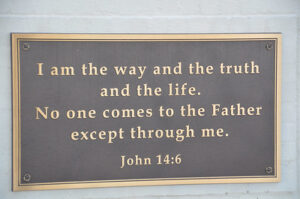
The issue is that God’s Word does not support those views. Those who seek to be accepted by God must approach Him through the mediator He has established. That mediator is Christ, for “...there is one God and one Mediator between God and men, the Man Christ Jesus…” (1 Timothy 2:5). As Jesus Himself once said, “I am the way and the truth and the life. No one comes to the Father except through me” (John 14:6). Much like the church at Laodicea, we are sure to run into similar trouble if our beliefs regarding these essential doctrines fail to align with God’s Word.

So, how can we account for the Laodiceans’ distorted self-image? Well, Revelation 3:17 alludes to their wealth and self-sufficiency. These qualities are normally positive and desirable, but like most things in life, their value depends on how we use them. Unfortunately, the Laodiceans’ sense of autonomy apparently led them to disregard Jesus’ cautionary message from the Gospel of John: “…apart from me you can do nothing” (John 15:5 NIV).

In certain respects, the Laodicean Christians functioned as a reverse image of the Christian community in Smyrna from Revelation chapter two. For example, Jesus told the Christians in Smyrna, “I know about your suffering and your poverty but you are rich!” (Revelation 2:9 NLT). However, the Laodicean Christians deluded themselves into believing the opposite; they thought they were rich when they were really “… wretched, pitiful, poor, blind and naked.”

Image Attribution: Photo by Judy Baxter – Pipe Organ Demonstration for VSU’s Learning In Retirement

XVI

“You say, ‘I’m rich. I’m wealthy. I don’t need anything.’ Yet, you do not realize that you are miserable, pitiful, poor, blind, and naked” (Revelation 3:17 GW).

Jesus’ assessment of the Laodicean church differed greatly from that church’s view of itself. That prompted Him to offer the following directive to the Christian community in that area…

“I counsel you to buy from me gold refined in the fire, so you can become rich; and white clothes to wear, so you can cover your shameful nakedness; and salve to put on your eyes, so you can see” (Revelation 3:18 NIV).

Given the highly descriptive nature of these recommendations, it’s likely that Jesus chose these examples for a reason. For instance, Laodicea was said to have held a prominent role as a financial center in the ancient world. It also produced a distinctive black wool that was sourced from a special breed of sheep that was selectively bred for this purpose. Finally, Laodicea also produced a medicinal ointment that was useful in treating certain eye conditions.

That background information offers some insight into these advisories from Revelation 3:18. In light of their financial expertise, the Laodiceans could readily grasp Jesus’ counsel to purchase refined gold from Him. That recommendation encouraged them to relinquish their faith in material wealth and focus on the eternal riches He could provide.

Instead of the black wool the Laodiceans produced, Jesus offered to provide them with white garments, a cross-cultural symbol of purity and honor. As an alternative to the short-term relief offered by a topical eye medication, Jesus wrote them a prescription that would remove their blindness and enable them to truly see.

That first piece of advice prompts us to recall the words of 1 Peter 1:7, a passage that speaks of our “…faith, being much more precious than gold that perishes, though it is tested by fire, may be found to praise, honor, and glory at the revelation of Jesus Christ.” The second offers a ready association with Jesus’ message to the church at Sardis from earlier in this chapter: “He who overcomes shall be clothed in white garments, and I will not blot out his name from the Book of Life; but I will confess his name before My Father and before His angels” (Revelation 3:5).

Jesus’ third recommendation directs our attention to His messianic commission, a charge that included “…recovery of sight to the blind” (Luke 4:18). The good news for us is that Jesus is still ready to “sell” these things to anyone who is willing to receive them today.

XVII

“I am the one who corrects and disciplines everyone I love. Be diligent and turn from your indifference” (Revelation 3:19 NLT).

Students, athletes, and musicians typically face many challenges in striving to be the best they can be. That’s because the path to excellence in those areas often requires a commitment to a series of far less glamorous activities like practice, hard work, study, correction, and self-discipline. Undisciplined individuals rarely excel in these fields and are likely to underperform on tests, in games, and during concerts as a result.

However, there is another important aspect to this idea. For instance, consider a scenario where a coach or teacher refused to offer any form of training, instruction, or correction to a student or athlete. Imagine the detrimental effect of that approach upon those who looked to such leaders for guidance. Under normal conditions, a negligent instructor who failed his or her students in that manner would likely face immediate dismissal.

On the other hand, an excellent teacher or coach will motivate, instruct, and correct students and athletes in order to enable them to perform at their highest level. Our text from Revelation 3:19 tells us that Jesus does much the same in our spiritual lives. Although it is rarely easy to face correction and discipline, those qualities enable us to secure the growth and development that God seeks for us.

The Biblical book of Hebrews references the Old Testament book of Proverbs in addressing this subject…

“And have you forgotten the exhortation that addresses you as sons? ‘My son, do not regard lightly the discipline of the Lord, nor be weary when reproved by him. For the Lord disciplines the one he loves, and chastises every son whom he receives.’

It is for discipline that you have to endure. God is treating you as sons. For what son is there whom his father does not discipline? If you are left without discipline, in which all have participated, then you are illegitimate children and not sons” (Hebrews 12:5-8 ESV).

Hebrews 12:11 then continues by saying…

“No discipline seems enjoyable at the time, but painful. Later on, however, it yields the peaceful fruit of righteousness to those who have been trained by it” (CSB).

These passages remind us that the presence of divine discipline indicates the presence of divine love. We can be confident that God has a purpose for those periods of spiritual discipline we experience, and will bring something positive and meaningful from them in our lives.

Image Attribution: Motivation by Nick Youngson CC BY-SA 3.0Alpha Stock Images

XVIII

“Behold, I stand at the door and knock. If anyone hears My voice and opens the door, I will come in to him and dine with him, and he with Me” (Revelation 3:20).

While Revelation 3:20 is excerpted from “The Revelation of Jesus Christ,” a fitting subtitle for this verse might be, “The Revelation of the Laodiceans.” And much like some other portions of the book of Revelation, this passage reveals something quite unsettling.
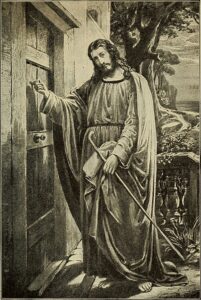
For instance, we might assume that Jesus served as the primary object of worship in the church of Laodicea. But if that was true, then why was He made to wait outside, as implied in the verse quoted above? Furthermore, why did He have to request entry into what was allegedly His church? The most plausible explanation is that this was the church of the Laodiceans, and not Jesus’ church in Laodicea. This likely meant that the church of Laodicea had very little in common with Jesus, except perhaps in name only.

This illustration also offers a broader application. For example, this “door” may serve as a symbolic representation of our innermost being in a spiritual and emotional sense. Since Jesus seeks to establish a sincere, loving relationship with us, He will respectfully decline to enter the lives of those who aren’t willing to open up to Him in faith. Figuratively speaking, He will stand at the threshold of our lives and enter by invitation.

Next, this reference to “dining together” is made easier when we consider the historical practices that typically defined a meal of that era. Then, as now, people usually structured daily mealtimes in three parts. This practice mirrored our contemporary equivalents of breakfast, lunch, and dinner. The first meal often consisted of bread with a filling of fruit, cheese, or olives. We might think of this as a first-century version of a modern-day breakfast sandwich.

Lunch typically included more bread, cheese, seasonal fruits, and olives. Finally, there was an evening meal that was normally eaten near sundown. That menu often featured a stew made from lentils or vegetables along with portions of bread to dip into the stew. This meal was very important from a cultural standpoint, for it offered a time of fellowship and conversation for those who were present.

As everyone ate together, they all received nourishment from the same meal and thus enjoyed a common bond of shared experience. Thus, it was symbolic of two or more people joining together. Jesus used this illustration to help communicate the close, personal relationship that He desires to have with those who open the door of their lives to Him.

Image Attribution:  Spicer, William Ambrose, 1866-, No restrictions, via Wikimedia Commons

XIX

“To him who overcomes I will grant to sit with Me on My throne, as I also overcame and sat down with My Father on His throne” (Revelation 3:21).

One of the more striking parallels between the first-century church of Laodicea and our twenty-first century world is a mutual sense of apathy or indifference. That common thread of complacency makes Jesus’ message to this church especially relevant for today.

This type of mentality poses a challenge, for it is difficult to cultivate an authentic, loving, and intimate relationship with those who are apathetic toward such things. It also serves to explain why Jesus rejects lukewarm Christianity. In fact, Jesus’ response to the Laodiceans was more than just a mere expression of disapproval; He essentially told them, “Your attitude makes me ill.”

Nevertheless, our text from Revelation 3:22 offers Jesus’ personal guarantee: “As for those who emerge victorious, I will allow them to sit with me on my throne, just as I emerged victorious and sat down with my Father on his throne” (CEB). So Jesus offers a place alongside Himself for those who rely on Him to conquer spiritual apathy. He reserves that place of honor, respect, friendship, and authority for those who enter a genuine, loving relationship with Him.

That brings us to the final verse of this important chapter…

“”He that hath an ear, let him hear what the Spirit saith unto the churches” (Revelation 3:22 KJV).

Even though the first-century churches of Ephesus, Pergamos, Smyrna, Thyatira, Sardis, Philadelphia, and Laodicea no longer exist, we would do well to pay attention to Jesus’ messages to these churches. These letters were not simply directed to an ancient collection of church fellowships; they are for anyone who is willing to listen and apply the action items within them. For example…

  • Jesus’ message to the church at Ephesus should motivate us to ensure that our love for Christ does not grow cold.
  • We should not grow fearful of the punitive actions taken by those who oppose Christianity, as we learned in Jesus’ letter to the church at Smyrna.
  • The letter to the church of Pergamos reminds us of our responsibility to identify and reject false teachers.
  • Our text from Revelation 2:18-29 cautions us to avoid compromise in the name of “tolerance” like the church at Thyatira.
  • A church congregation that is seemingly living and active may conceal a dead faith, much like the first-century church at Sardis.
  • It is important to take advantage of the open doors of opportunity that Jesus provides, just as He opened a door for the ancient church in Philadelphia.
  • Finally, we must not settle for an indifferent, self-deceptive relationship with Jesus, like the church at Laodicea.

Thus, we should prayerfully look for ways to apply these directives from Revelation chapters two and three in our lives.

Image Attribution: Jerry Kiesewetter jerryinocmd, CC0, via Wikimedia Commons

Scroll to Top