

“But now the righteousness of God apart from the law is revealed, being witnessed by the Law and the Prophets” (Romans 3:21).
The phrase “But now…” signals an important transition in the book of Romans.
After a brief introduction that encompassed verses one through fifteen of Romans chapter one, Paul the Apostle moved to establish the theological foundation for the rest of this epistle. That section covered Romans 1:16-3:20 and addressed the following topics…
- Humanity’s deliberate rejection of God and the consequences that followed as a result.
- God’s righteous judgment of such conduct.
- Religious hypocrisy and true Godliness.
- Answers to objections.
- The true character of unrepentant human nature.
While the preceding verses of this chapter have presented us with a dark (but truthful) portrait of humanity, the next portion of Romans chapter three will break upon us like the dawn of a new day. In it, Paul will explore an important theme within this epistle: justification by faith. Starting here in Romans 3;21, the term “righteousness” will appear four times over the next six verses as Paul elaborates on how sinful human beings can attain a right standing with God through faith.
As we have come to expect, Paul grounded his position in the Scriptures by informing us that this way of salvation “…is attested by the law and the prophets” (NET). Much of that support will come in the following chapter when Paul turns to Biblical examples of Abraham, the great Old Testament patriarch, and David, the great king of Israel.
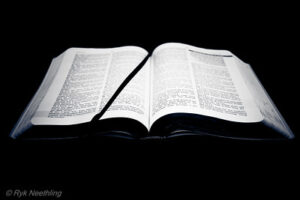 For now, this portion of Scripture draws our attention to an important point: like Paul, we must establish a valid Scriptural basis for our doctrines and beliefs. Paul followed this custom (Acts 17:2-3), as did the Apostle Peter (Acts 2:16), as well as Jesus Himself (Mark 11:17). This principle is particularly important whenever we seek to validate a spiritual belief, activity, or movement today.
This does not mean that everyone will reach a consensus on spiritual matters of secondary importance. However, Paul’s example tells us that we should establish a Scriptural foundation for our beliefs. As Jesus once said to the religious leadership of His era…
“Do not think, however, that I am the one who will accuse you to my Father. Moses, in whom you have put your hope, is the very one who will accuse you. If you had really believed Moses, you would have believed me, because he wrote about me. But since you do not believe what he wrote, how can you believe what I say?” (John 5:45-47 GNT).
Image Attribution: Ryk Neethling, CC BY-NC 2.0, via flickr.com. Disclaimer notice